
RO antiscalants for scale prevention and membrane cleaners for clean-in-place (CIP).
In an industrial reverse osmosis (RO) system, dissolved minerals become more concentrated as water passes through the membranes. Under certain feedwater and recovery conditions, minerals can precipitate and form scale. Organic matter, colloids and biofilm can also accumulate on membranes or in feed channels, reducing permeate flow or increasing differential pressure.
Oneschem supplies RO antiscalants for continuous feedwater dosing and acidic and alkaline RO membrane cleaners for deposits that have already formed. Select an antiscalant based on feedwater chemistry and operating recovery, and a membrane cleaner based on the type of deposit and the membrane manufacturer’s cleaning limits.
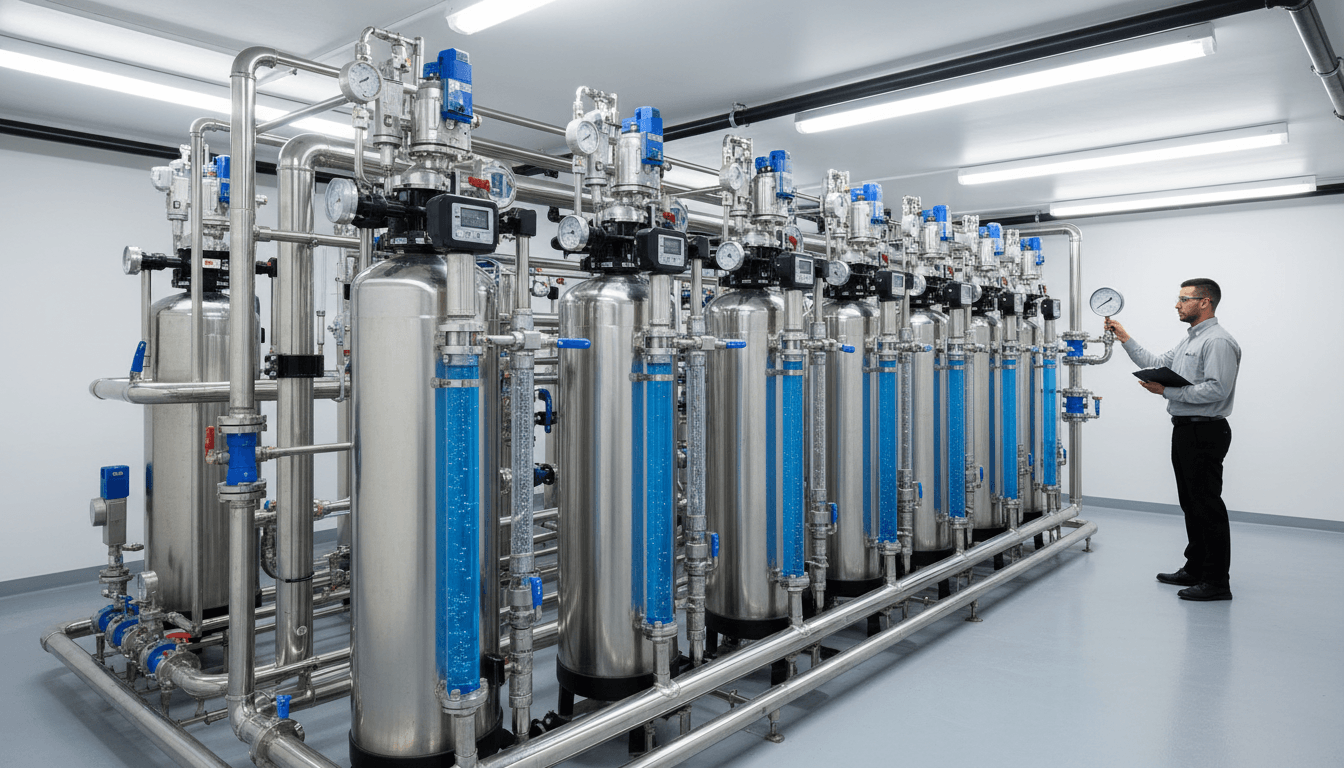
Common Pain Points in Reverse Osmosis Systems
Mineral scale on RO membranes
Calcium carbonate, sulfate salts and silica can form deposits as the RO concentrate becomes moreconcentrated. The dominant scaling risk depends on the feedwater composition and the system’s operating recovery.
What to check: Review the feedwater analysis and projected concentrate chemistry to select an antiscalant for the salts most likely to precipitate.
Declining normalized permeate flow
Scale or fouling can reduce water production. A drop in measured flow can also result from colder feedwater or changes in operating pressure.
What to check: Compare normalized permeate flow with the system baseline and review pretreatment and operating conditions before scheduling a cleaning.
Rising differential pressure across an RO stage
Biofilm, silt and organic deposits can restrict flow through membrane feed channels and increase the pressure drop across a stage.
What to check: Review stage-by-stage pressure trends and pretreatment performance. An alkaline RO membrane cleaner may be appropriate when organic deposits or biofilm are the main foulants.
Short intervals between membrane cleanings
When deposits return soon after CIP, the feedwater chemistry, antiscalant program or cleaning procedure may need adjustment.
What to check: Compare performance before and after CIP, then review the likely foulant, cleaner selection, dosing and operating recovery.
Recommended Chemicals for RO Systems
For continuous scale control
✔General-Purpose RO Antiscalant — A phosphonate and polyacrylate blend designed to inhibit common carbonate and sulfate scales, including calcium carbonate and calcium sulfate, in brackish-water RO systems.
✔High-Silica RO Antiscalant — A polymer-based formulation designed to help control silica and silicate deposition in high-silica feedwater, including selected brackish-water and reuse applications.
✔High-Hardness RO antiscalant— A DTPMPA-based formulation for systems with elevated calcium sulfate, barium sulfate or strontium sulfate scaling risk.
For membrane cleaning during CIP
✔Acidic RO Membrane Cleaner— A low-pH powder designed to remove calcium carbonate scale and metal oxide deposits, such as iron oxides.
✔Alkaline RO Membrane Cleaner— A high-pH powder formulated with surfactants and dispersants to help loosen organic deposits, biofilm and colloidal silt.
Key Benefits
Control scale during operation. Match the antiscalant to the feedwater chemistry and operating recovery to limit mineral deposition.
Target the deposit during CIP. Choose low-pH cleaning for suitable inorganic deposits and high-pH cleaning for organic or biological fouling.
Help recover lost permeate flow. Deposit removal during CIP can recover flow lost to removable scale or fouling.
Reduce scale-related cleaning interruptions. An appropriately selected antiscalant can help extend the interval between cleanings where mineral scale drives the cleaning schedule.
Typical RO Applications
Brackish groundwater treatment and desalination
Industrial process water and boiler makeup water production
Industrial wastewater reclamation and water reuse after pretreatment
Industrial RO plants treating high-hardness or high-silica feedwater
Technical Support & Chemical Selection Share your feedwater analysis, membrane make and model, and system recovery with Oneschem for help selecting an RO antiscalant and reviewing dosage. If you are troubleshooting fouling, include the RO stage pressure readings, permeate flow trends and recent CIP records to help identify a suitable membrane cleaner.
Request the product technical data sheet (TDS) and safety data sheet (SDS) for the recommended grade. Follow the membrane manufacturer’s limits for cleaning pH, temperature and operating conditions.
FAQ?
What is the difference between an RO antiscalant and an RO membrane cleaner?
An RO antiscalant is dosed into the feedwater during operation to inhibit mineral scale formation. An RO membrane cleaner is circulated through the membrane system during CIP to remove deposits that have already accumulated.
How do I choose the right RO antiscalant and dosage?
Start with a recent feedwater analysis and the system’s operating recovery. Review pH, temperature, alkalinity, calcium, sulfate and silica, plus barium and strontium where relevant. Use the projected concentrate chemistry to assess scaling risk and select the product and dose.
Should I use an acidic or alkaline RO membrane cleaner?
An acidic cleaner is typically selected for calcium carbonate scale and deposits such as iron oxides. An alkaline cleaner is typically selected for organic fouling, biofilm and colloidal silt. Mixed deposits may require a staged clean. Follow the membrane manufacturer’s guidance on cleaning sequence and limits.
When should I clean my RO membranes?
Track normalized permeate flow, normalized salt passage and differential pressure against a clean operating baseline. If those trends reach the membrane manufacturer’s cleaning criteria, review pretreatment and operating conditions and use the likely foulant to guide cleaner selection.
Get an RO Chemical Recommendation
Tell us about your RO system and the issue you’re seeing. Share your feedwater analysis, membrane model and operating recovery for help with antiscalant selection, dosage or membrane cleaning.