
Mining and mineral processing operations rely on stable solid-liquid separation to maximize water recovery, maintain throughput, and control tailings and sludge handling costs. Variations in ore type, grinding fineness, reagent schemes, and seasonal water conditions often cause thickener upsets, high overflow turbidity, and poor dewatering performance. Onschem supplies coagulants and flocculants for mining & mineral processing to improve clarification, thickening, and tailings dewatering while reducing total treatment cost.
Core products include Polyacrylamide (PAM) flocculants, Polyaluminium Chloride (PAC), Polyferric Sulfate (PFS) and Polyaluminium Ferric Chloride (PAFC)—supported by application guidance for thickeners, clarifiers, and dewatering systems.
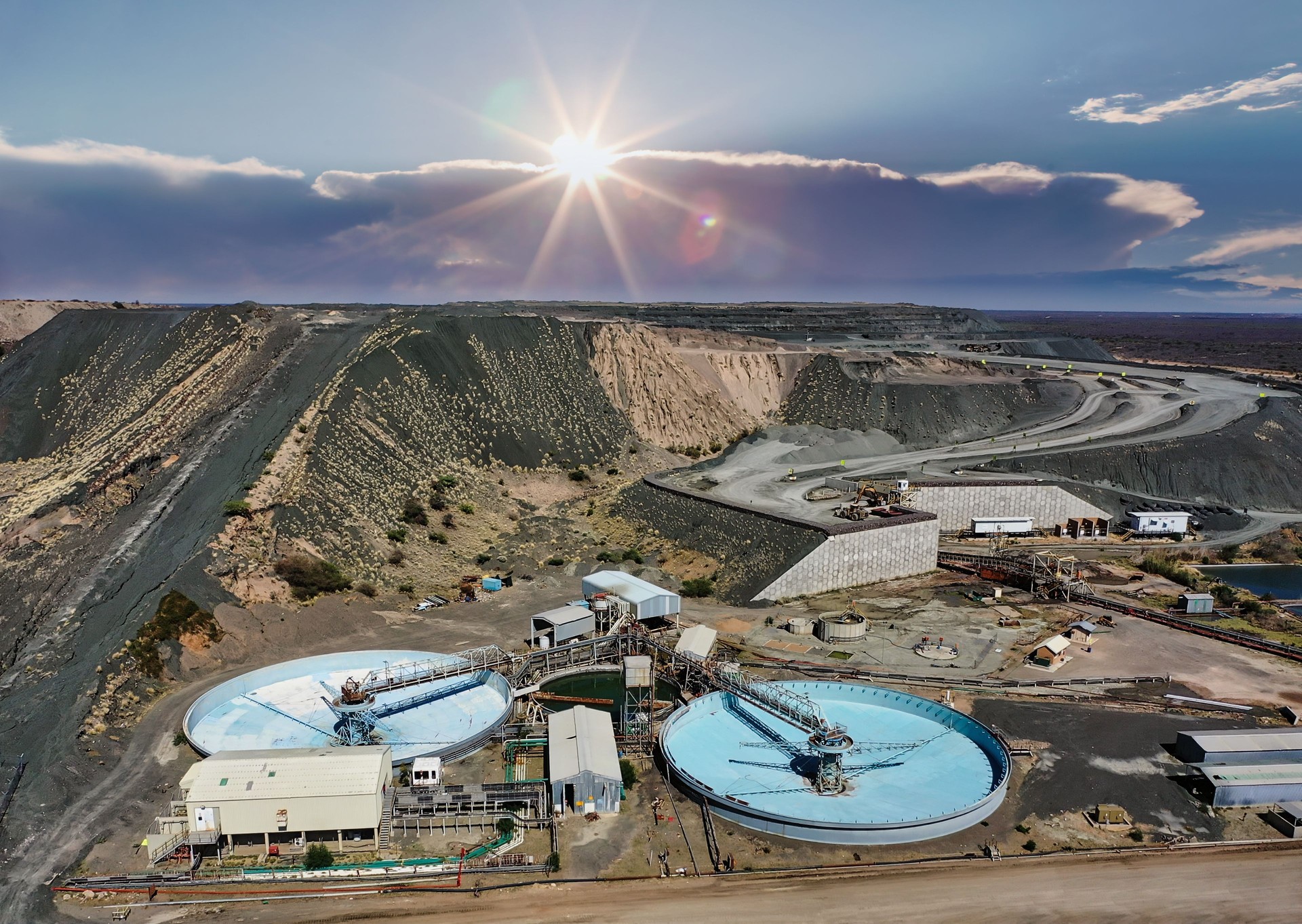
Typical Pain Points (Where Separation Performance Breaks Down)
Thickener overflow turbidity and poor water recovery
When fines and clays remain dispersed, overflow becomes cloudy, harming recycle water quality and downstream flotation performance.
What helps: stronger particle aggregation via correct PAM selection and controlled dosing/mixing to form fast-settling flocs.
Low underflow density / high rake torque / unstable bed
Inadequate floc structure can cause slow settling and a weak bed, leading to unstable thickener operation and reduced throughput.
What helps: optimizing flocculant molecular weight/charge and feed strategy to build a stable bed while maintaining manageable torque.
Excess flocculant consumption
Overdosing is common when operators chase clarity. This increases cost and can worsen overflow quality by restabilizing fines or creating fragile flocs.
What helps: dose optimization based on solids loading, particle size distribution, and mixing energy—often reducing kg/t consumption.
Tailings dewatering bottlenecks (filter press/belt filter/centrifuge)
Fine tailings and clay-rich slurries are difficult to dewater, producing wet cake and high filtrate turbidity.
What helps: targeted PAM conditioning and, where applicable, coagulant support to improve drainage and cake solids.
Water chemistry impacts (pH, salinity, hardness)
Water chemistry strongly affects floc formation and polymer efficiency—especially in high-salt or low-pH environments.
What helps: selecting PAM grades tolerant to site water conditions and using coagulants where charge neutralization is required.
Recommended Chemicals
✔ Ultra-High Molecular Weight Anionic PAM
For rapid solid–liquid separation.
✔ Cationic PAM
For tailings dewatering and thickener optimization.
✔ PAC / PAFC
Improves clarity in recycling water.
Benefits for Mining Operations
Faster settling speed
Higher clarity of overflow water
Lower flocculant consumption
Works with iron ore, gold, coal, bauxite tailings
Improves thickener and filter performance
Applications
Tailings pond treatment
Concentrator thickeners
Coal washing
Mineral flotation
Slurry dewatering
FAQ?
How do I choose a flocculant for thickeners?
Key factors include particle size distribution (fines/clays), slurry solids concentration, pH/salinity, and feedwell mixing energy. Selecting the correct PAM molecular weight and charge density—and optimizing dosing location and dilution—usually improves both overflow clarity and underflow density.
Why does thickener overflow turn cloudy even after increasing polymer dosage?
Common causes include overdosing, insufficient dilution/mixing, reagent carryover (dispersants/frothers), or changes in ore mineralogy creating more ultrafines. Optimization often reduces dosage while improving clarity.
Do coagulants help with clay-rich tailings?
They can. Coagulants such as PAC/PFS/PAFC may assist with charge neutralization for difficult colloids, improving the effectiveness of downstream polymer flocculation—especially when fines remain highly dispersed.
Can better clarification improve flotation performance?
Yes. Clearer recycled process water reduces unwanted fine solids and chemical carryover, improving flotation stability and reducing variability.
Get a quote
Send us a message and we'll get back to you in 24 hours.