
Seawater-Compatible Firefighting Foam: Formulation Challenges for Gulf Region Manufacturers
ON
For foam concentrate manufacturers serving the Arabian Gulf, formulating for freshwater is rarely enough. Coastal refineries, LNG plants, petrochemical terminals, ports, and offshore platforms frequently rely on seawater as their primary firewater source. Moreover, Gulf seawater is among the warmest and most saline in the world, often exceeding 40,000 ppm total dissolved solids (TDS) alongside high ambient storage temperatures.
Developing seawater compatible firefighting foam for these conditions requires careful control of surfactant chemistry, electrolyte tolerance, and thermal stability. A concentrate that performs well in laboratory tap water can show reduced expansion, faster drainage, or precipitation when proportioned with Gulf seawater.
Why Gulf-Region Fire Protection Systems Often Rely on Seawater
In arid coastal regions, maintaining massive reserves of treated freshwater for high-demand fire-protection systems is often impractical. Instead, marine terminals, tank farms, offshore platforms, and coastal industrial sites draw directly from the sea to supply firewater ring mains, deluge systems, and large-capacity monitors.
For manufacturers supplying AFFF in the Gulf region, this creates two simultaneous challenges:
- The concentrate must remain stable in storage at ambient temperatures that regularly exceed 40–45°C.
- When diluted at 1%, 3%, or 6%, the concentrate must instantly tolerate high concentrations of sodium, chloride, magnesium, calcium, and sulfate ions without losing fire-suppression performance.
How Salinity Affects Foam Expansion, Drainage and Film Formation
From a water-chemistry perspective, introducing a surfactant concentrate into high-salinity water drastically changes the ionic environment. Dissolved divalent cations—particularly calcium (Ca2+\text{Ca}^{2+}Ca2+) and magnesium (Mg2+\text{Mg}^{2+}Mg2+)—are the primary disruptors.
High salinity affects foam physics and chemistry in several ways:
- Compression of the electrical double layer: High ionic strength screens the electrostatic charges between surfactant heads, altering micelle structure and bubble-wall elasticity.
- Precipitation with anionic surfactants: Calcium and magnesium ions can bind with anionic hydrocarbon surfactants to form insoluble salts (soap scum), stripping active foamers from the solution.
- Reduced foam expansion: With fewer active surfactants available at the air-water interface, the solution generates lower expansion ratios and coarser bubble structures.
- Faster 25% drainage time: Weakened lamellae allow liquid to drain rapidly from the foam blanket, reducing heat resistance and burnback protection.
- Impaired spreading: If surfactant compatibility shifts upon dilution, the interfacial tension between the foam solution and hydrocarbon fuel may rise, slowing film formation and vapor suppression.
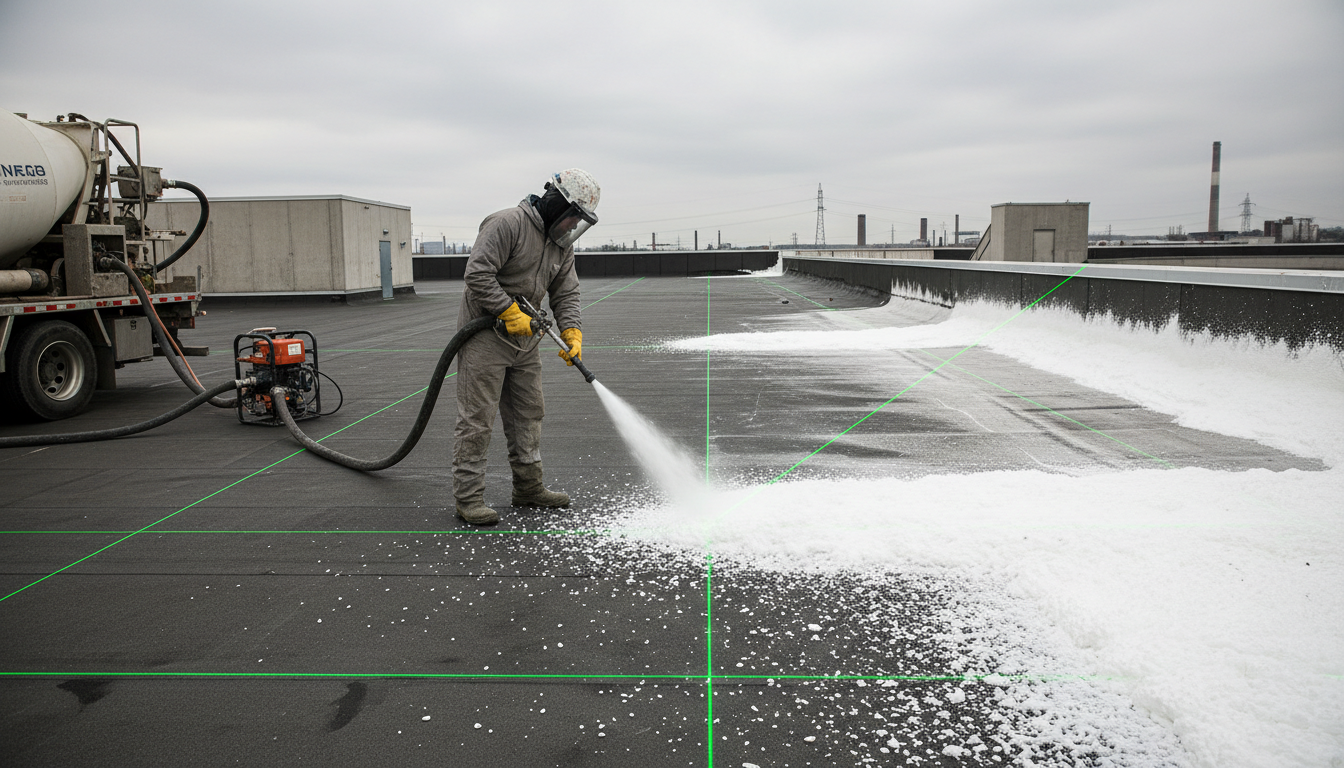
Fluorosurfactant Performance in High-Salinity Water Systems
A fluorinated surfactant for foam is incorporated to lower aqueous surface tension (typically to 15–18 mN/m) and promote positive spreading across hydrocarbon fuels. In high-salinity water, the fluorosurfactant must remain soluble and surface-active despite the heavy electrolyte load.
Many commercial fluorosurfactants used in AFFF are amphoteric or zwitterionic. Because their charge behavior can adapt across a broad pH and electrolyte range, properly selected amphoteric fluorosurfactants generally exhibit good salt tolerance. However, their performance still depends on the surrounding co-surfactants. If the hydrocarbon surfactant package precipitates in seawater, it can drag fluorosurfactants out of solution or disrupt the mixed micelles needed for rapid surface-tension reduction.
Formulating AFFF for Marine Terminals and Offshore Platforms
To build a robust seawater-compatible AFFF or AR-AFFF, formulators must design the entire system around divalent-ion tolerance:
- Co-surfactant selection: Pair fluorosurfactants with salt-tolerant amphoteric (such as betaines or amine oxides) and nonionic hydrocarbon surfactants rather than relying heavily on salt-sensitive linear alkylbenzene sulfonates or lauryl sulfates.
- Chelating and sequestering agents: Incorporate compatible chelators or builders where appropriate to reduce interference from Ca2+ and Mg2+ upon dilution, without destabilizing the concentrate during storage.
- Solvent and hydrotrope balance: Glycol ethers and hydrotropes must keep the surfactant blend clear in the drum at 50°C and help ensure rapid, homogeneous dilution in cold or warm seawater.
- AR-AFFF polymer protection: For alcohol-resistant foams, xanthan gum or other polysaccharides must hydrate and form a stable polymeric membrane on polar solvents without salting out or coagulating in seawater.
- Process water quality: Use deionized water during concentrate manufacturing so the product does not start its shelf life already loaded with hardness ions.
Laboratory Testing Methods for Seawater-Compatible Foam Concentrates
Testing only with municipal tap water is a common pitfall. Manufacturers targeting coastal and offshore applications should evaluate every formulation using synthetic seawater (such as ASTM D1141 or EN 1568 test water) and, where possible, higher-salinity water representative of the Arabian Gulf.
A complete laboratory protocol should compare freshwater and seawater dilutions side by side—both before and after accelerated heat aging (e.g., 50–60°C):
- Solution clarity and precipitation: Check diluted solutions immediately and after 1 hour for haze, flocculation, or sediment.
- Surface and interfacial tension: Measure at the target proportioning rate using both freshwater and seawater.
- Foam expansion and 25% drainage time: Verify using standard laboratory nozzles and paddles.
- Spreading coefficient and fire performance: Confirm film formation and burnback resistance on relevant hydrocarbon fuels according to international standards such as EN 1568, UL 162, or IMO MSC.1/Circ.1312.
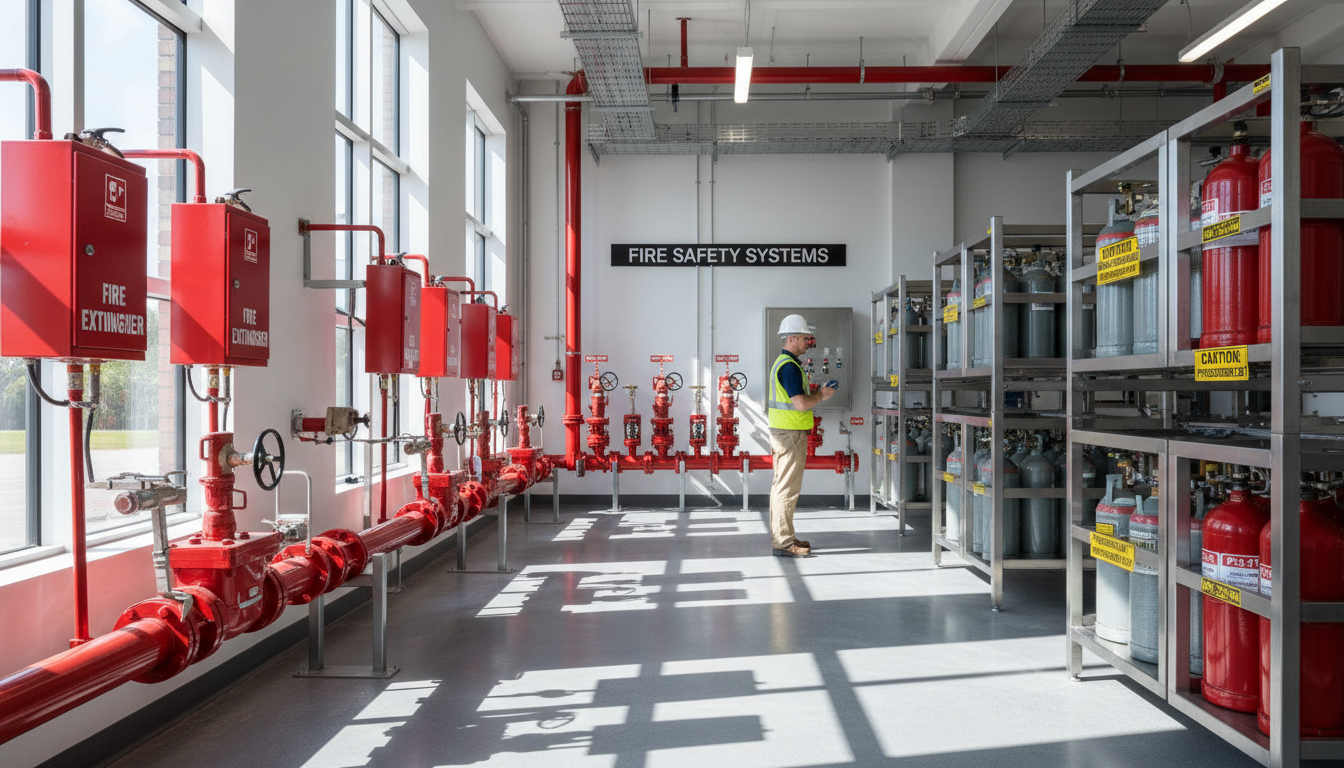
How to Reduce Performance Variation Between Production Batches
In seawater systems, the margin for formulation error is narrow. Minor variations in raw material purity or residual salt content can push a formulation over its solubility limit when mixed with seawater.
To maintain batch-to-batch consistency:
- Enforce strict incoming QC on active solids, pH, chloride/sulfate content, and surface tension for all surfactants.
- Standardize mixing order, temperature, and hydration times—especially for AR-AFFF polymers.
- Include a seawater foam-expansion and drainage test on the Certificate of Analysis (COA) for every production batch sold into marine or Gulf markets.
- Retain reference samples from every batch to track real-time stability under warm warehouse conditions.
Recommended Fluorosurfactant Selection Criteria
When qualifying a fluorinated surfactant for foam concentrates intended for the Gulf region, manufacturers should look beyond basic surface-tension numbers:
- Electrolyte and divalent-ion tolerance: Proven clarity and low surface tension in synthetic and high-salinity seawater.
- Co-surfactant compatibility: Stable synergy with amphoteric and nonionic hydrocarbon foaming agents.
- Thermal stability: No phase separation, precipitation, or performance loss after elevated-temperature aging in the finished concentrate.
- Tight manufacturing specifications: Consistent active content, impurity profile, and batch-to-batch reproducibility.
- Regulatory and technical documentation: Complete TDS, SDS, COA, and clarity on regional regulatory compliance for fluorinated substances in target markets.
ONESCHEM supplies specialized fluorosurfactants engineered for demanding AFFF and AR-AFFF formulations. Contact our technical team to request product samples, TDS, SDS, COA, or formulation support for seawater-compatible and hot-climate firefighting foam concentrates.