
RO Membrane Cleaning for Electronics Wastewater Reuse in Vietnam: Removing Silica, Copper and Organic Fouling Without Damaging Membranes
Vietnam's electronics manufacturing sector has expanded rapidly over the past decade. Semiconductor assembly, printed circuit board (PCB) fabrication, display manufacturing, and precision components production are now concentrated in major industrial parks across Hanoi, Ho Chi Minh City, Binh Duong, Dong Nai, and Bac Ninh. With this growth comes increasing demand for high-purity process water and tightening restrictions on industrial wastewater discharge.
Water reuse through reverse osmosis is an increasingly attractive investment for Vietnamese electronics industrial parks. It can reduce freshwater procurement costs, lower discharge volumes, help facilities meet environmental compliance targets, and support the water security requirements of multinational manufacturers. However, electronics wastewater creates a uniquely challenging environment for RO membranes. When fouling is not managed correctly, it accelerates membrane performance decline and drives up operational costs.
Understanding the nature of this fouling and selecting the right RO membrane cleaning chemicals is essential for maintaining reliable water reuse performance.
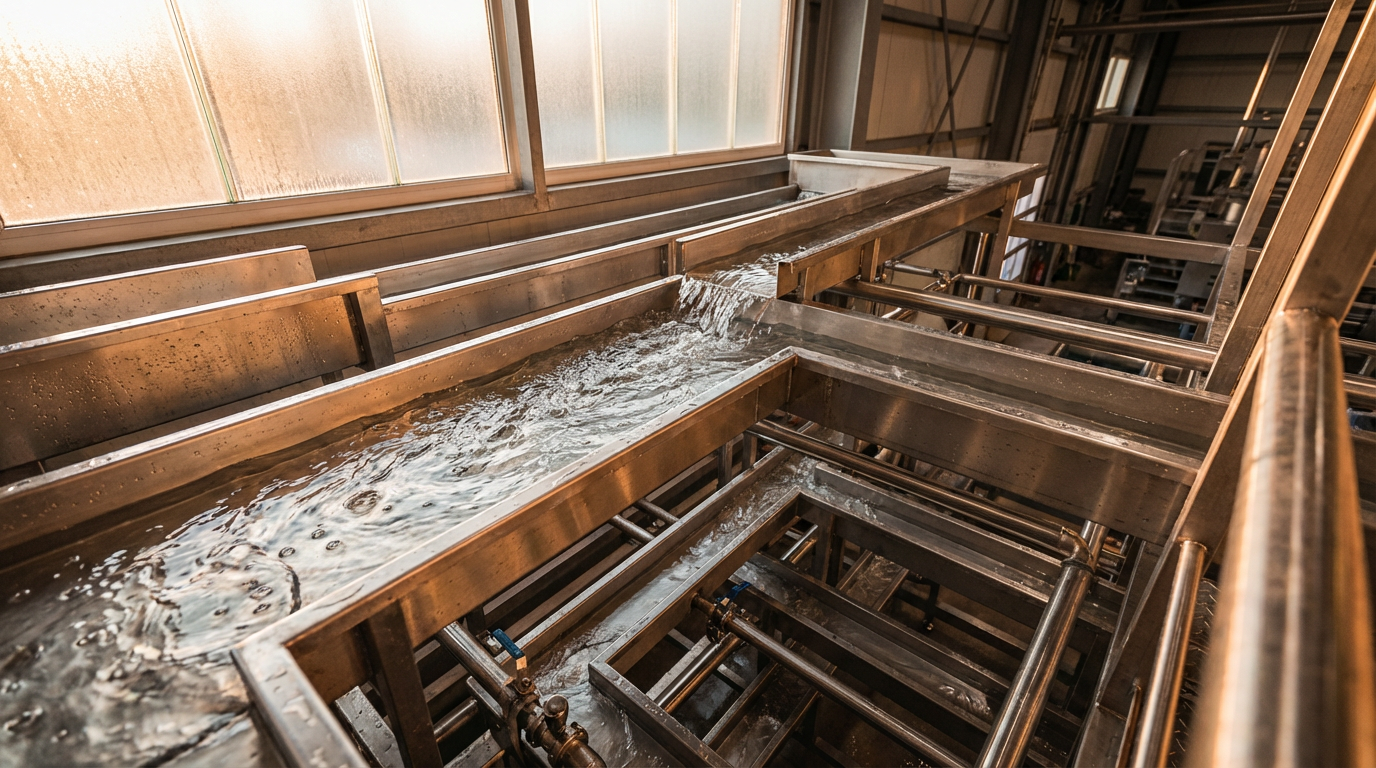
Why Electronics Wastewater Creates Complex RO Membrane Fouling
Electronics manufacturing generates wastewater streams containing a wide variety of contaminants. These may include copper, nickel, tin, and other heavy metals from plating and etching processes, colloidal silica from chemical mechanical planarization (CMP) or silicon wafer processing, surfactants and chelating agents from cleaning baths, organic solvents, photoresist residues, fluoride compounds, and high-strength rinse water from multiple process steps.
When this wastewater is collected, partially treated, and fed to an RO system for reuse, several types of fouling can develop on the membrane surface and in the feed spacer channels.
Copper fouling is one of the most common challenges. Copper ions can precipitate as copper hydroxide or copper oxide under alkaline conditions, or form complex metal deposits with organic chelating agents. These deposits can create a dense, adherent layer that reduces permeate flux and eventually increases salt passage.
Colloidal silica behaves differently from reactive dissolved silica. Colloidal silica particles carry surface charge that changes with pH. At certain pH ranges, they can destabilize and deposit rapidly onto the membrane, forming a cohesive gel-like layer that resists flushing and conventional acid cleaning.
Surfactants and organic compounds from cleaning agents, photoresists, or process chemicals can adsorb onto the membrane surface. These organic deposits may trap metal ions and fine particles, creating a composite fouling layer that is more resistant than any single contaminant alone.
The combination of copper, silica, and organics creates a mixed fouling condition that cannot be fully resolved with a single cleaning step or a generic cleaning product.
What Acid, Alkaline, and Chelating Cleaners Target
A well-designed RO cleaning program uses different cleaning agents to target specific foulants based on their chemical nature.
Acidic RO cleaners are generally effective for dissolving mineral deposits, including calcium carbonate, calcium sulfate, iron oxides, and copper hydroxide or copper oxide. Low pH cleaning can protonate metal hydroxides, increase their solubility, and help remove inorganic precipitates from the membrane surface. However, acid alone cannot dissolve organic deposits or effectively disperse colloidal silica.
Alkaline RO cleaners are designed to remove organic fouling, biofouling, and silica-related deposits. A properly formulated alkaline RO cleaner typically contains surfactants, dispersants, and pH-adjusting components. Alkaline conditions saponify fats and oils, solubilize organic compounds, and can increase the negative surface charge of silica colloids, which promotes their dispersion and removal. This is particularly important where electronics wastewater contains residual surfactants, photoresist fragments, or organic process chemicals.
Chelating cleaning agents such as EDTA-based or citric acid formulations can sequester metal ions including copper, nickel, iron, and manganese. Chelants form soluble complexes with these metals, helping to lift metal deposits from the membrane surface without aggressive pH conditions. Chelating cleaners are especially useful when metals are tightly bound with organic matter or embedded in a complex fouling matrix.
For copper fouling RO membrane cleaning, a chelant-enhanced cleaning step may be required when standard acid cleaning does not achieve sufficient flux recovery.

Why Single-Step Acid Cleaning Is Often Insufficient
Many RO operators default to a low-pH acid clean when they observe declining permeate flow or increasing feed pressure. For pure calcium carbonate or iron scale, this approach can be effective. But for electronics wastewater fouling, a single acid cleaning step is rarely sufficient.
The reason is that colloidal silica, organic compounds, and surfactant deposits are not acid-soluble. If the membrane is carrying a composite fouling layer, an acid clean may remove some metal components while leaving behind a silica and organic matrix that continues to restrict permeate flow. The membrane may show limited improvement in normalized flux after acid cleaning.
Attempting more aggressive acid treatment to compensate may cause pH-related damage to the membrane or feed spacers, and still not address the root fouling mechanism.
A diagnostic approach to membrane fouling is therefore far more effective than a fixed cleaning schedule.
Choosing the Right Cleaning Sequence
The sequence of cleaning steps should be based on fouling analysis, not a standard protocol. For most electronics wastewater RO systems, the cleaning sequence decision comes down to understanding which fouling layer is dominant and how different foulants interact.
In many practical cases, cleaning begins with an alkaline step to loosen and disperse organic deposits, colloidal silica, and biofilm. This may also remove some metal deposits that are bound within an organic matrix. After the alkaline clean and flushing, an acid or chelant step can then address residual metal deposits, carbonate scale, and remaining inorganic fouling.
Starting with alkaline cleaning before acid cleaning is often more effective for mixed fouling because:
- The alkaline clean removes the organic and silica layer, exposing underlying metal deposits.
- The subsequent acid or chelant clean can then act more directly on the exposed inorganic fouling.
- If acid cleaning is done first, the organic and silica layer may trap remaining metal deposits and prevent effective removal.
However, there are situations where the dominant fouling is clearly inorganic and the organic content is low. In these cases, an acid or chelant clean may be performed first, followed by an alkaline polish.
Fouling analysis methods such as membrane autopsy, scanning electron microscopy, energy-dispersive X-ray spectroscopy, and loss-on-ignition testing can provide direct evidence of fouling composition and help guide cleaning sequence decisions.
How Cleaning Temperature, Flow Rate, and Soak Time Affect Recovery
Even the most appropriate cleaning chemistry will underperform if the physical parameters are not correctly controlled.
Temperature significantly affects cleaning efficiency. Higher cleaning temperatures generally increase solubility, accelerate chemical reactions, and reduce the viscosity of cleaning solutions. Many membrane manufacturers permit cleaning temperatures up to 40 to 45 degrees Celsius for polyamide membranes. Alkaline cleaners in particular tend to be more effective at elevated temperature for removing organic deposits and colloidal silica.
Recirculation flow rate affects the shear force applied to the membrane surface and ensures that the cleaning solution is well distributed across all elements in the pressure vessel. Insufficient flow may leave stagnant zones where fouling remains undisturbed. Flow rate should generally produce a moderate cross-flow velocity without exceeding pressure drop limits.
Soak time allows the cleaning solution to penetrate and soften deposits. For dense or aged fouling, a static soak of 30 to 60 minutes or longer may be required before recirculation resumes. Multiple short recirculation and soak cycles are often more effective than a single long continuous recirculation.
After cleaning, thorough flushing is essential to remove cleaning solution residuals before the system returns to normal operation. Residual cleaning chemicals can affect permeate quality, react with feedwater, or degrade membrane performance if not fully removed.
Protect Your Electronics Wastewater RO System
For electronics wastewater treatment Vietnam and silica removal for water reuse, a consistent membrane cleaning program based on actual fouling analysis is one of the most cost-effective investments an industrial park or electronics manufacturer can make. Cleaning membranes at the right interval, with the right chemistry, sequence, and physical parameters, can extend membrane life, reduce replacement costs, and maintain the water reuse quality needed for sensitive manufacturing processes.
Contact Oneschem to request an RO membrane fouling diagnostic checklist and cleaning chemical recommendation for your electronics wastewater reuse system. Provide your feedwater analysis, fouling symptoms, and current cleaning program for a detailed evaluation and product selection tailored to your facility.