
Restoring RO Performance After Winter Shutdowns in Uzbekistan: Membrane Preservation, Biocide Dosing and CIP Cleaning
ON
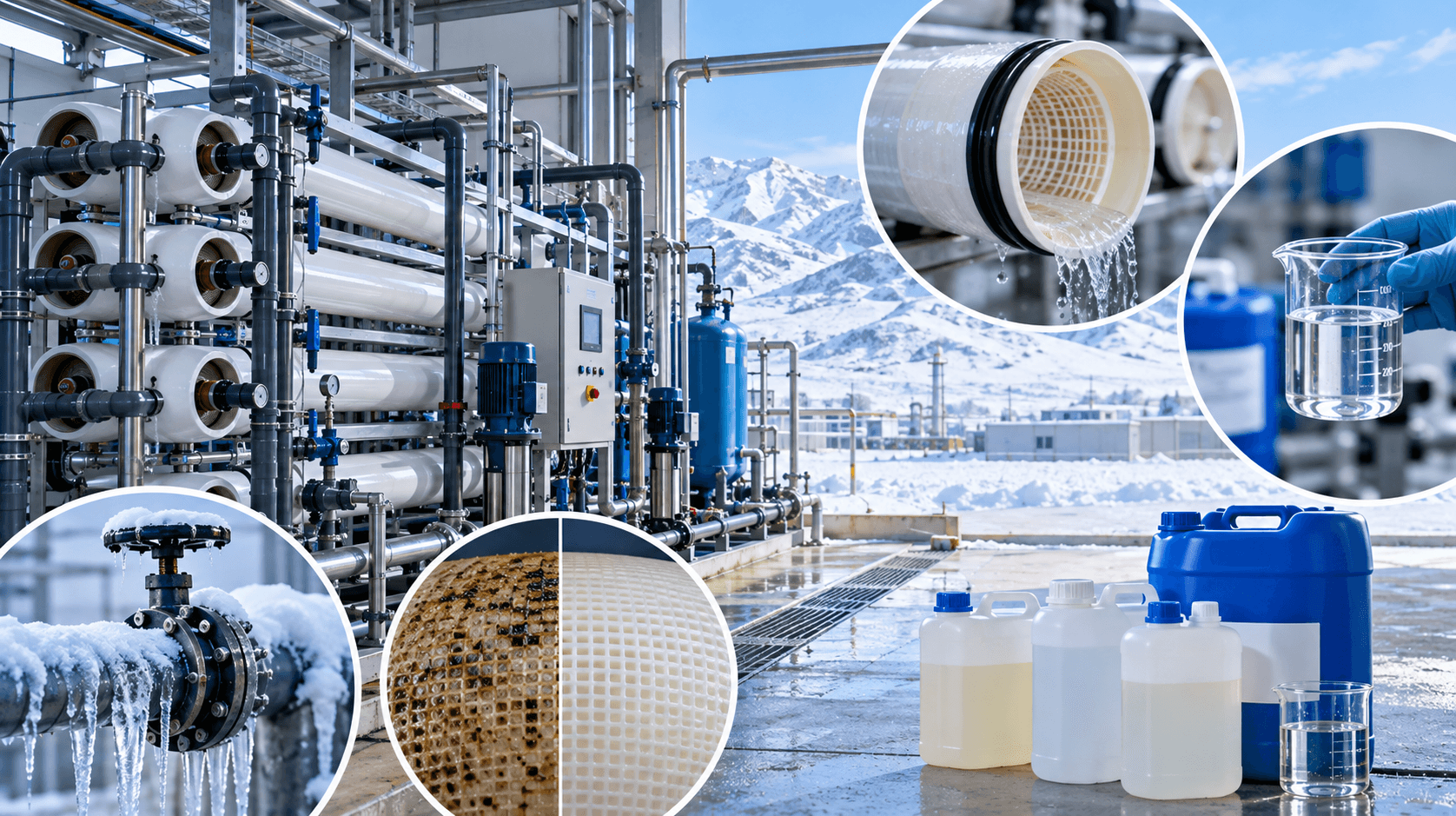
Reverse osmosis systems in Uzbekistan frequently operate under seasonal or intermittent conditions. Mining sites, food and beverage plants, power facilities, construction camps, and industrial water projects may stop production during winter, scheduled maintenance, or periods of reduced demand. Low ambient temperatures add another risk: water left inside piping, pressure vessels, pumps, and instruments can freeze and damage equipment.
Although an idle RO system may appear protected because it is not processing water, shutdown periods can accelerate membrane deterioration. Concentrated salts remain inside the membrane vessels, microorganisms multiply in stagnant water, and suspended deposits can dry or harden on membrane surfaces.
A structured RO shutdown preservation Uzbekistan program should therefore include flushing, suitable preservation chemistry, temperature control, periodic inspection, and a documented restart procedure. Correct use of an RO membrane preservation chemical, compatible RO membrane biocide, and targeted CIP cleaning can prevent unnecessary membrane replacement after a winter shutdown.
Why Intermittent RO Systems Are Especially Vulnerable
Continuous RO operation keeps water moving through membrane feed channels and regularly removes concentrate. Stable flow also supports consistent pretreatment, antiscalant dosing, cartridge filtration, and operational monitoring.
During shutdown, these protective conditions disappear. Stagnant water creates several problems:
- Disinfectant residuals decay over time.
- Bacteria can colonize membrane surfaces and feed spacers.
- Concentrated salts may precipitate as temperature and pH change.
- Iron, manganese, silica, and suspended solids can settle.
- Organic matter can become a nutrient source for microorganisms.
- Seals and membrane elements may dry if vessels are drained incorrectly.
- Freezing water can damage housings, pipes, valves, and instruments.
Intermittent operation can be more damaging than a well-managed continuous process because every stop and restart creates changing hydraulic, chemical, and microbiological conditions. The risks are greatest when operators simply switch off the high-pressure pump without flushing or preserving the membrane train.
Residual Concentrate Creates Scaling and Biological Risks
At shutdown, the water remaining near the final RO stage is typically more concentrated than the feedwater. It may contain elevated calcium, sulfate, bicarbonate, silica, barium, strontium, and other scale-forming species.
If this concentrate remains stagnant, mineral deposits can form on membrane surfaces. Deposits that might have been removable during normal operation can become denser and more difficult to dissolve over several weeks or months. Allowing membrane elements to partially dry can harden these deposits further.
Stagnant concentrate also provides favorable conditions for biofilm growth, particularly when the feed contains natural organic matter or when pretreatment has not fully controlled microbial loading. Biofilm can block membrane feed spacers, increase differential pressure, reduce normalized permeate flow, and cause unstable permeate quality after restart.
Before shutdown, the RO train should generally be displaced with suitable low-salinity permeate or other membrane-compatible water. Flushing should continue until concentrate conductivity approaches the specified shutdown target. The exact procedure must follow the membrane and system manufacturer’s recommendations.
Short-Term Shutdown Versus Long-Term Preservation
The correct chemical strategy depends on shutdown duration, water quality, ambient temperature, and membrane type.
Short-Term Shutdown
For a short stop, flushing with RO permeate may be sufficient if the system remains full, sealed, and protected from microbial contamination. Automatic periodic flushing can further reduce stagnation risks.
Operators should isolate the RO train from untreated feedwater and prevent backflow from tanks or chemical lines. If freezing is possible, maintaining the system above its minimum allowable temperature is essential. Draining should only be performed according to equipment and membrane supplier instructions, because partially drained membranes can dry out or retain isolated pockets of water.
Long-Term Shutdown
Longer shutdowns generally require a validated RO membrane preservation chemical. Sodium metabisulfite solutions are commonly used for preservation because they help create a reducing environment and suppress biological growth. However, concentration, pH, renewal interval, and material compatibility must follow the membrane manufacturer’s procedure.
Some systems use an approved membrane storage biocide, particularly where preservation periods are extended or microbial risk is high. The preservation solution must completely displace process water and contact all membrane elements. Pressure vessels should remain filled and sealed to limit oxygen ingress and external contamination.
Preservation chemicals do not provide freeze protection unless the formulation is specifically designed and approved for that purpose. A winter plan must separately address heating, insulation, drainage, or an authorized low-temperature preservation method.
Principles for Using Non-Oxidizing Biocides
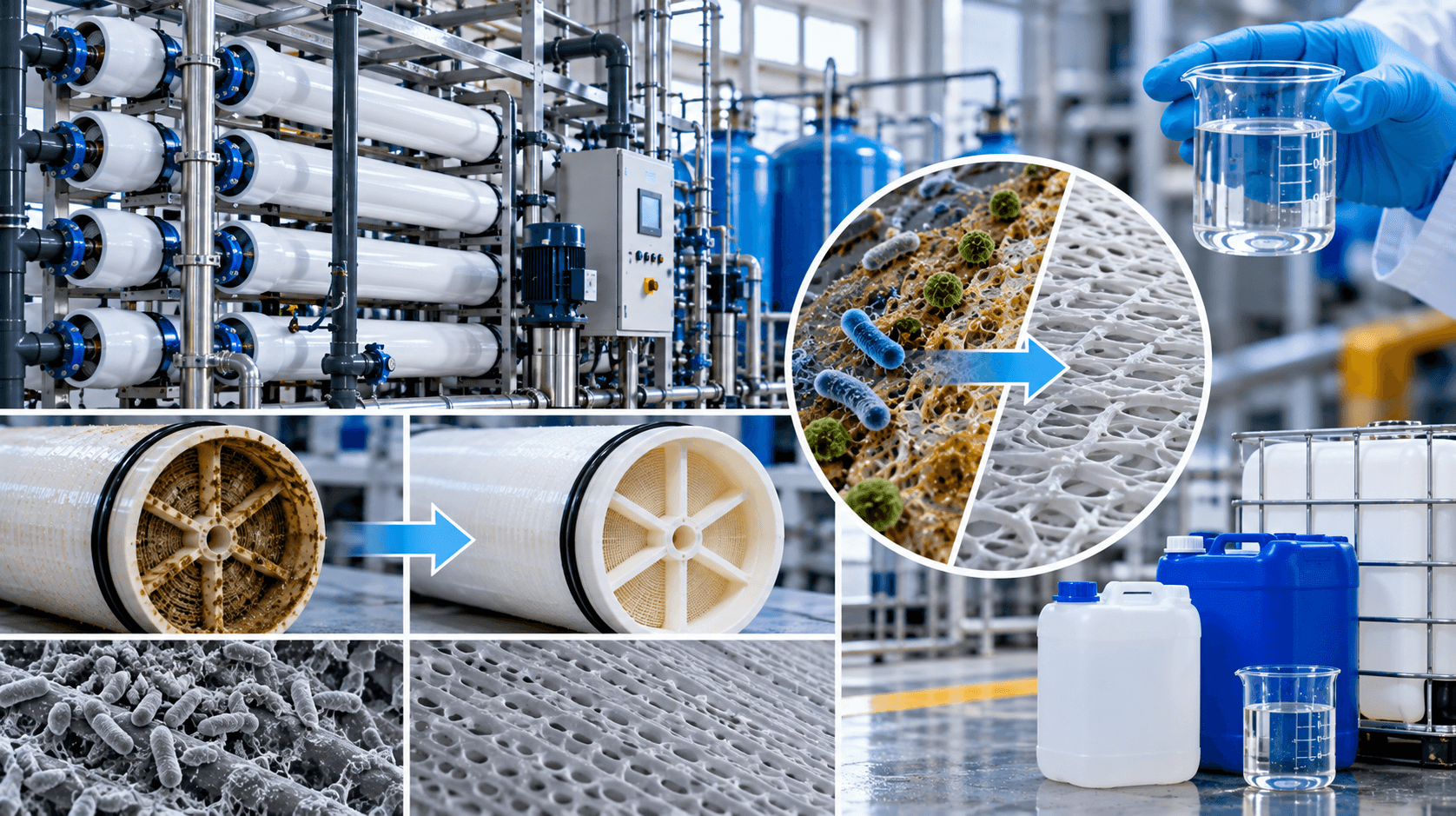
Polyamide RO membranes can be damaged by oxidizing chemicals such as free chlorine. For this reason, membrane preservation and online microbial control typically rely on membrane-compatible, non-oxidizing products.
A suitable RO membrane biocide should be selected according to:
- Membrane manufacturer approval
- Compatibility with seals, piping, and pressure vessels
- Feedwater pH and temperature
- Shutdown duration
- Target bacteria, fungi, or biofilm
- Disposal and downstream treatment requirements
- Compatibility with antiscalants and other chemicals
Non-oxidizing does not automatically mean membrane-safe. Certain products can affect membrane performance or react with other treatment chemicals. Operators should never estimate biocide dosage without technical review, and different biocides should not be mixed unless compatibility has been confirmed.
Before preservation, heavy existing biofilm should be removed through an appropriate CIP program. A biocide can suppress microbial activity, but it may not penetrate and remove a mature, mineralized biofilm.
Why Flushing, Testing, and CIP May Be Required Before Restart
A preserved RO system should not be returned directly to production. The reverse osmosis restart cleaning procedure should begin with a visual inspection of chemical tanks, housings, valves, filters, pumps, instruments, and exposed piping. Operators should check for freeze damage, leaks, corrosion, dried seals, and biological growth.
Next, drain and dispose of the preservation solution in accordance with local requirements. Flush the membrane train with suitable water until the preservative residual, odor, pH, and conductivity meet the restart criteria. Initial permeate should normally be diverted to drain rather than sent directly to a boiler, production line, or potable-water tank.
Restart the system gradually and record:
- Feed, concentrate, and permeate pressure
- Differential pressure by stage
- Feed temperature and conductivity
- Permeate and concentrate flow
- Permeate conductivity
- Normalized permeate flow
- Normalized salt rejection
CIP cleaning may be necessary if normalized flow has declined significantly, differential pressure has increased, or salt rejection has deteriorated compared with the clean baseline. Low-pH cleaners are commonly used for mineral scale and metal deposits, while alkaline formulations are generally used for organics and biofouling. Cleaning sequence and pH limits must comply with membrane supplier guidance.
Preventing Preservation Solution Failure
Preservation liquid can lose effectiveness through oxidation, dilution, leakage, temperature changes, or microbial contamination during sampling and handling. To maintain protection:
- Prepare solutions with clean, membrane-compatible water.
- Use clean, dedicated mixing tanks and hoses.
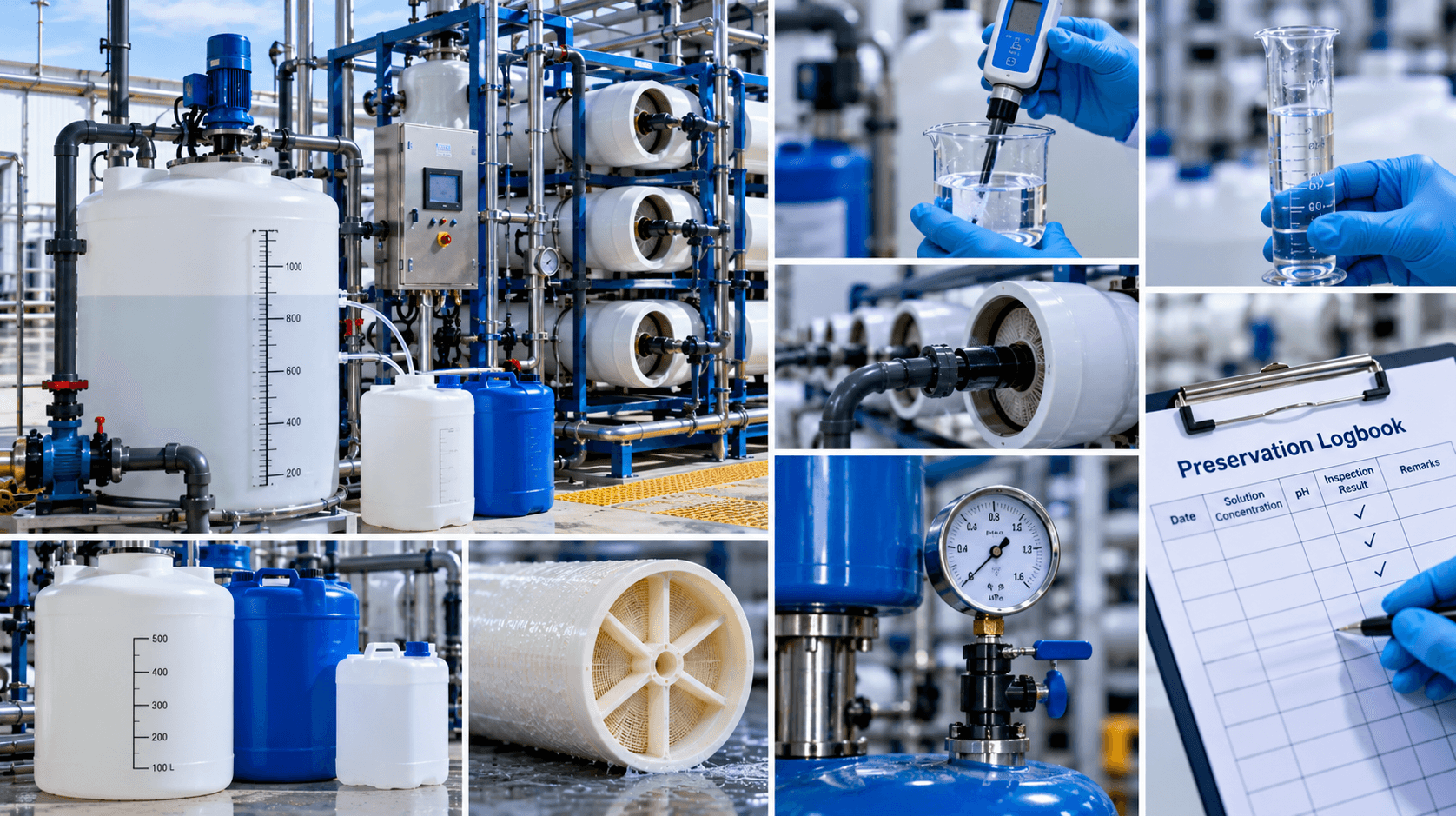
- Verify concentration and pH at specified intervals.
- Keep membrane vessels full and properly isolated.
- Prevent rainwater, untreated feed, and process water from entering.
- Renew the solution according to supplier requirements.
- Document preparation date, test results, inspections, and replacement dates.
A clear logbook is essential. Without records, operators cannot confirm whether preservation chemistry remained effective throughout the shutdown.
Get an RO Winter Shutdown and Restart Checklist
Effective winter preservation protects more than the membrane elements. It reduces restart delays, emergency CIP demand, biological contamination, and premature replacement costs.
Request our RO winter shutdown and restart checklist for Uzbekistan projects. The package can include membrane preservation chemical selection, RO membrane biocide guidance, flushing and monitoring steps, chemical inventory planning, and a site-specific CIP decision framework based on membrane type, water analysis, shutdown duration, and minimum winter temperature.