
Reducing Foam and Sludge Costs in Brazilian Food Processing Wastewater: Silicone Defoamers and Cationic PAM Dewatering
ON
Brazil’s food and beverage industry includes large meat-processing facilities, dairy plants, breweries, beverage bottlers, sugar and ethanol operations, edible-oil processors, and poultry slaughterhouses. These facilities generate wastewater that is highly variable and often difficult to treat.
Typical wastewater may contain fats, oils and grease (FOG), proteins, blood, suspended solids, starch, sugars, detergents, cleaning chemicals, and high chemical oxygen demand (COD). These contaminants create two persistent operational challenges:
- Excessive foam in dissolved air flotation (DAF), equalization, aeration, and sludge-thickening systems
- Oily, sticky biological sludge that is expensive to dewater and dispose of
A combined chemical program using a compatible wastewater defoamer and properly selected Cationic Polyacrylamide can improve treatment stability, reduce sludge volume, and lower hauling or disposal costs. For food processing wastewater Brazil applications, chemical selection should be based on real wastewater and sludge tests—not simply on standard dosage assumptions.
Where Foam and Oily Sludge Come From in Food Wastewater
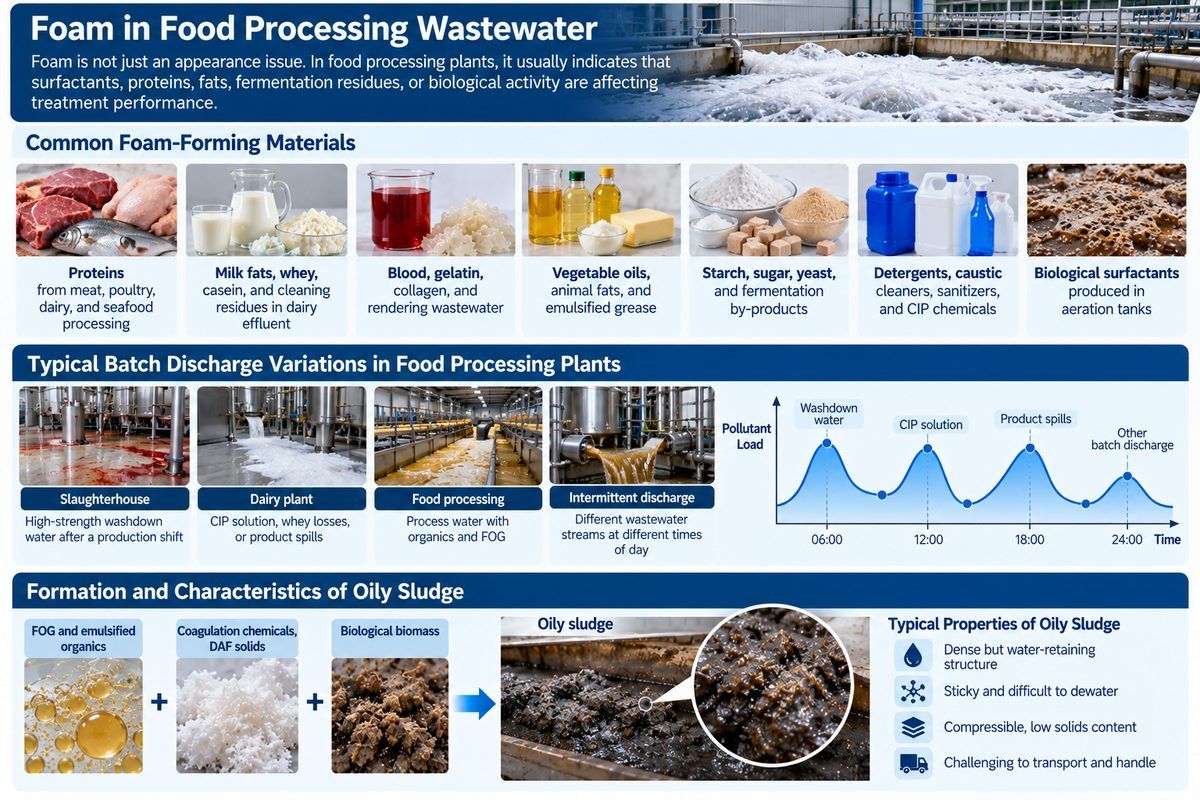
Foam is not just an appearance issue. In food processing plants, it usually signals that surfactants, proteins, fats, fermentation residues, or biological activity are affecting treatment performance.
Common foam-forming materials include:
- Proteins from meat, poultry, dairy, and seafood processing
- Milk fats, whey, casein, and cleaning residues in dairy effluent
- Blood, gelatin, collagen, and rendering wastewater
- Vegetable oils, animal fats, and emulsified grease
- Starch, sugar, yeast, and fermentation by-products
- Detergents, caustic cleaners, sanitizers, and CIP chemicals
- Biological surfactants produced in aeration tanks
Food wastewater is frequently discharged in batches. A slaughterhouse may send high-strength washdown water after a production shift, while a dairy plant may release CIP solution, whey losses, or product spills at different times of day. These sudden changes can destabilize DAF chemistry and biological treatment, creating intermittent foam events and difficult sludge properties.
Oily sludge is often formed when FOG and emulsified organics combine with coagulation chemicals, DAF solids, and biological biomass. The result can be a dense but water-retaining sludge that is sticky, compressible, and difficult to handle.
Why Foam Reduces DAF, Aeration, and Thickening Performance
In a DAF system, microbubbles attach to suspended solids, oil droplets, and flocculated particles, lifting them to the surface for removal. Moderate surface froth may be expected, but uncontrolled foam can interfere with the process.
Excess foam in DAF may:
- Reduce effective contact between air bubbles and floc particles
- Cause uneven sludge blanket formation
- Carry solids over weirs and into downstream treatment
- Create pump cavitation or inaccurate level measurement
- Increase odor and housekeeping issues
- Make skimmer operation less efficient
In aeration basins, persistent foam can reduce oxygen-transfer efficiency and create zones of poor mixing. Thick foam blankets may also trap solids that should remain suspended, contributing to sludge age instability. In secondary clarification and sludge thickening, foam can carry biomass out of the intended process stream and reduce the effective capacity of tanks.
A reliable dissolved air flotation foam control program must therefore do more than collapse visible foam. It should work without disrupting coagulation, flocculation, flotation, oxygen transfer, downstream biological treatment, or sludge dewatering.
Silicone Defoamers: Fast Knockdown and Persistent Foam Control
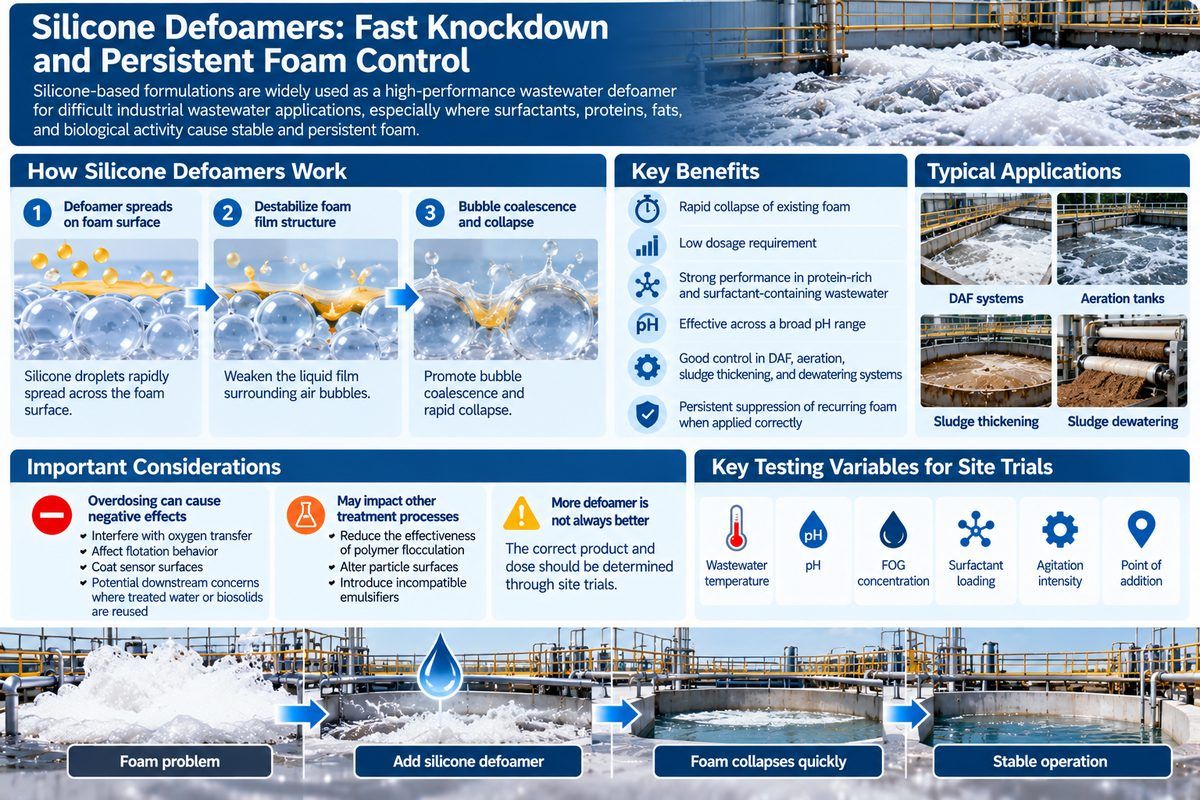
Silicone-based formulations are widely used as a high-performance wastewater defoamer for difficult industrial wastewater applications. Properly formulated silicone defoamers typically contain active silicone compounds dispersed in an appropriate carrier system, often with hydrophobic particles that enhance foam-breaking action.
Their main benefits include:
- Rapid collapse of existing foam
- Low dosage requirement compared with many conventional products
- Strong performance in protein-rich and surfactant-containing wastewater
- Effectiveness across a broad pH range
- Good control in DAF, aeration, sludge thickening, and dewatering systems
- Persistent suppression of recurring foam when applied correctly
Silicone defoamers work by destabilizing foam lamellae—the thin liquid films surrounding air bubbles. They spread rapidly across the foam surface, weaken the film structure, and promote bubble coalescence and collapse.
However, “more defoamer” is not always better. Excessive silicone addition can interfere with oxygen transfer, affect flotation behavior, coat sensor surfaces, or create downstream concerns where treated water or biosolids are reused. In some cases, overdosing can reduce the effectiveness of polymer flocculation by altering particle surfaces or introducing incompatible emulsifiers.
The correct product and dose should be determined through site trials. Important testing variables include wastewater temperature, pH, FOG concentration, surfactant loading, agitation intensity, and point of addition.
How High-Charge Cationic PAM Improves Oily Sludge Dewatering
Cationic Polyacrylamide, often called C-PAM, is a water-soluble polymer used to flocculate negatively charged suspended solids and biological sludge. In food wastewater treatment, C-PAM is especially valuable after DAF, biological treatment, or sludge thickening.
Biological sludge particles, fine fats, proteins, and colloidal organic matter often carry negative surface charges. A high-charge cationic polymer neutralizes these charges and bridges particles together, forming larger, stronger flocs.
A correctly selected C-PAM can provide:
- Faster sludge settling and thickening
- Improved capture of fine solids
- Higher cake solids after dewatering
- Reduced filtrate or centrate turbidity
- Lower polymer consumption compared with poorly matched grades
- Less sludge volume for transport and disposal
For oily sludge dewatering polymer selection, charge density is only one factor. Molecular weight, polymer architecture, emulsion or powder form, make-down quality, maturation time, and dosage point all influence results.
If the polymer charge is too low, fine solids may remain dispersed. If it is too high, the sludge may become overcharged, producing weak flocs and poor filtrate quality. Overdosing may also create slippery, gelatinous sludge that blinds filter cloths or reduces centrifuge performance.
Belt Filter Presses and Centrifuges Need Different Floc Strength
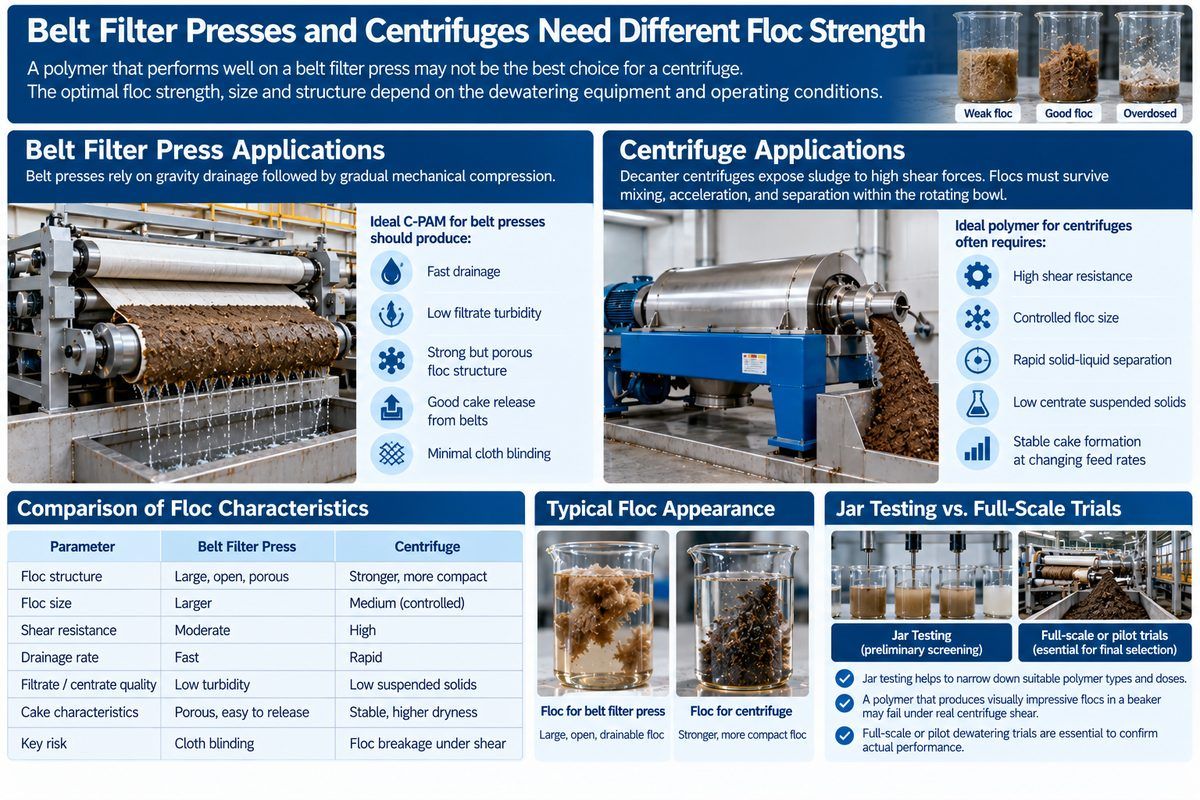
A polymer that performs well on a belt filter press may not be the best choice for a centrifuge.
Belt Filter Press Applications
Belt presses rely on gravity drainage followed by gradual mechanical compression. They generally require large, open, drainable flocs that release water quickly without blocking belt pores.
For belt presses, the ideal C-PAM should produce:
- Fast drainage
- Low filtrate turbidity
- Strong but porous floc structure
- Good cake release from belts
- Minimal cloth blinding
Centrifuge Applications
Decanter centrifuges expose sludge to high shear forces. Flocs must survive mixing, acceleration, and separation within the rotating bowl. A weak polymer floc may break apart, causing high centrate solids and poor cake dryness.
For centrifuges, the ideal polymer often requires:
- High shear resistance
- Controlled floc size
- Rapid solid-liquid separation
- Low centrate suspended solids
- Stable cake formation at changing feed rates
Jar testing is helpful, but full-scale or pilot dewatering trials are essential. A polymer that produces visually impressive flocs in a beaker may fail under real centrifuge shear.
Avoiding Defoamer Overdose and Downstream Process Impacts
A successful combined program requires coordination between foam control and sludge conditioning. Defoamer should be dosed at the lowest effective rate, preferably using automated control linked to visual inspection, foam sensors, or process trends.
Best practices include:
- Dose defoamer at the source of foam generation whenever possible.
- Avoid adding large slug doses directly before polymer flocculation.
- Confirm compatibility between defoamer, coagulant, and C-PAM.
- Monitor dissolved oxygen in aeration tanks after changing defoamer dosage.
- Evaluate DAF effluent turbidity and oil removal.
- Track cake solids, centrate quality, polymer consumption, and belt or centrifuge performance.
- Test sludge reuse or disposal requirements before changing chemical programs.
For facilities applying biosolids to land, composting, anaerobic digestion, or other beneficial-use routes, chemical compatibility is especially important. The goal is not merely to eliminate foam or maximize cake solids for one day; it is to create a consistent and cost-effective treatment process.
Request a Combined Defoamer and Sludge Dewatering Trial
Brazilian food processors can reduce wastewater treatment costs by addressing foam and sludge together. A correctly selected silicone wastewater defoamer improves DAF and aeration stability, while optimized Cationic Polyacrylamide improves thickening, dewatering, cake solids, and sludge-handling efficiency.
Request a food wastewater defoaming and sludge dewatering chemical trial. Provide your wastewater analysis, DAF operating data, sludge source, current polymer usage, dewatering equipment type, and target cake solids. Our technical team can recommend a compatible program for food processing wastewater Brazil, including dissolved air flotation foam control and oily sludge dewatering polymer optimization.