
Municipal Water Reuse in Peru: PAC and Polymer Pretreatment to Protect UF and RO Systems from Seasonal Turbidity Spikes
ON
Municipal water reuse is becoming increasingly important across Peru, where utilities and industrial users face growing water demand, dry-season supply pressure, and the need to protect rivers, groundwater, and coastal receiving waters. Treated municipal effluent can be reused for irrigation, industrial cooling, mine support services, dust suppression, landscape irrigation, and selected process-water applications.
However, reuse systems must often manage highly variable influent water quality. During the rainy season, upstream disturbances, stormwater inflow, sewer infiltration, and treatment-plant hydraulic surges can sharply increase turbidity, colloidal solids, color, algae, and dissolved organic matter. These fluctuations can overload ultrafiltration (UF) and reverse osmosis (RO) pretreatment systems.
A robust pretreatment program based on Poly Aluminium Chloride and an appropriate water treatment flocculant can stabilize UF feedwater quality, extend membrane run time, lower RO fouling risk, and improve overall reuse-water reliability. For municipal water treatment Peru projects, coagulation should be optimized for changing seasonal conditions rather than fixed around one “average” raw-water analysis.
Why Seasonal Turbidity Spikes Disrupt Water Reuse Systems
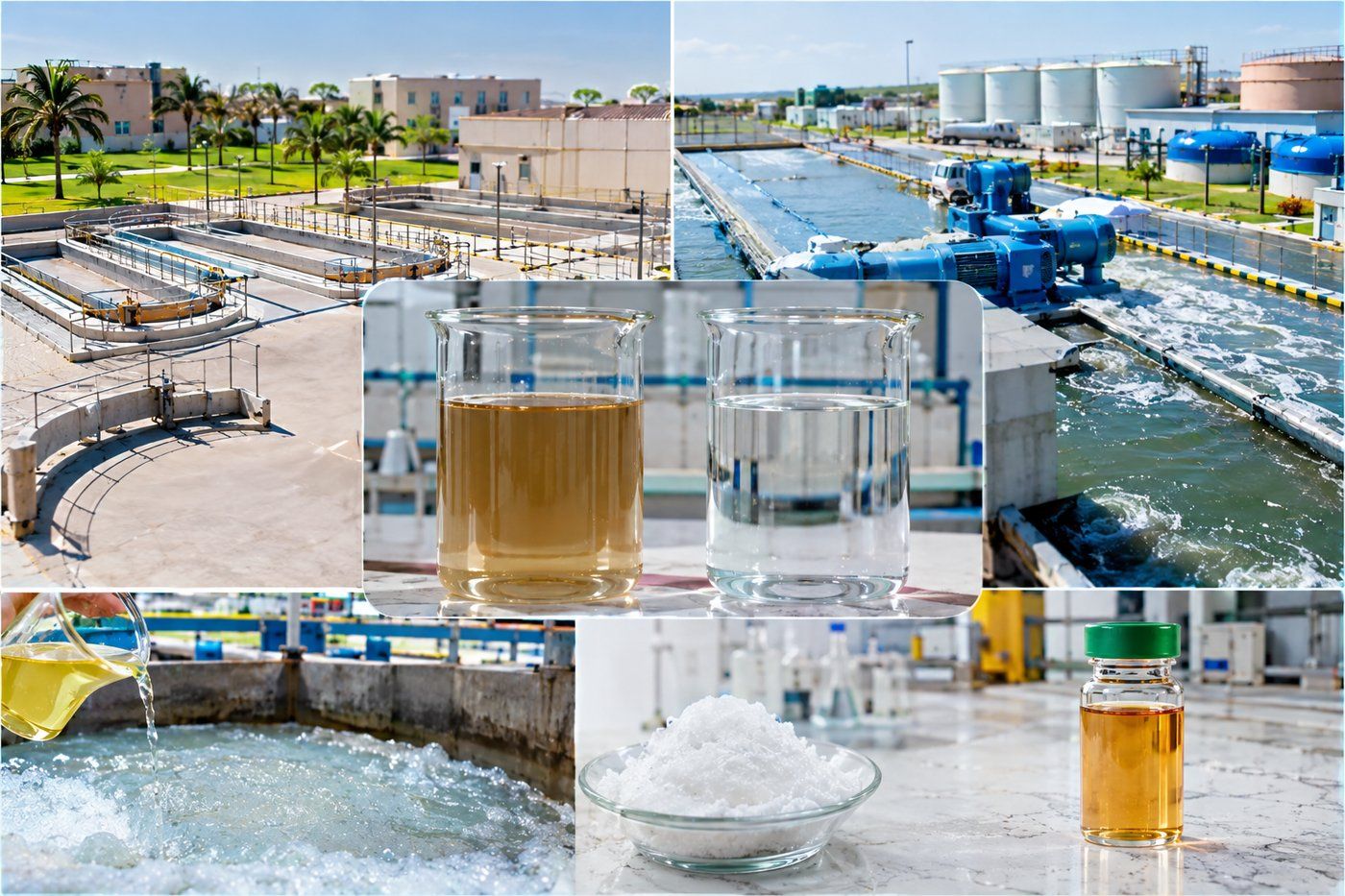
Turbidity is a practical indicator of suspended particles in water, including clay, silt, fine mineral solids, microorganisms, organic debris, and colloidal matter. In Peru, high turbidity events can occur during rainfall, river runoff, landslides, agricultural drainage, construction activity, or upstream treatment process upsets.
Municipal wastewater systems may also receive stormwater or infiltration during wet periods. This can increase hydraulic flow while changing the ratio of domestic wastewater, industrial discharge, grit, organic solids, and colloidal particles. Even if a wastewater treatment plant meets its routine discharge standard, short-term spikes in particulate loading can create serious challenges for downstream membrane reuse plants.
The problem is not only visible turbidity. Very fine colloids may pass through conventional settling tanks while remaining stable in suspension. These particles can have negative surface charges that prevent them from naturally aggregating. If they reach UF or RO systems, they accumulate on membrane surfaces and inside feed spacers.
Seasonal variability makes fixed chemical dosing unreliable. A dose that performs well during dry weather may be insufficient during a storm event. Conversely, excessive dosing during low-turbidity periods can increase residual aluminum, produce unnecessary sludge, and raise operating costs.
How High Turbidity and Colloids Affect UF and RO
UF membranes are designed to remove fine suspended solids, bacteria, and many colloidal particles. But UF is not immune to fouling. When feedwater turbidity rises, solids build up faster on the membrane surface, causing transmembrane pressure (TMP) to increase.
This often leads to:
- Shorter filtration cycles
- More frequent backwashing
- Higher chemically enhanced backwash frequency
- Increased air-scour demand
- Reduced net water production
- Faster membrane aging
- Higher cleaning chemical consumption
If UF performance becomes unstable, the downstream RO system receives inconsistent water quality. Fine colloids, residual organics, iron, manganese, and poorly removed particles can increase the RO feed’s Silt Density Index (SDI). High SDI contributes to particulate fouling, rising differential pressure, declining normalized permeate flow, and more frequent clean-in-place (CIP) events.
For many RO applications, pretreatment targets are commonly set around a low and stable SDI value, often below 3 to 5 depending on membrane configuration and operating design. The most important objective is not simply achieving a single acceptable test result. It is maintaining consistently low SDI during both normal and high-turbidity conditions.
PAC, PAFC, and Organic Flocculants: Key Selection Differences
Selecting the right coagulant program requires consideration of raw-water chemistry, pH, temperature, alkalinity, turbidity level, organic matter, and downstream membrane requirements.
Poly Aluminium Chloride
Poly Aluminium Chloride (PAC) is widely used in municipal and industrial water treatment because it contains pre-hydrolyzed aluminum species. Compared with conventional aluminum sulfate, PAC often offers faster floc formation, a broader effective pH range, and lower sensitivity to cold water or changing alkalinity.
PAC can destabilize negatively charged colloids through charge neutralization and sweep flocculation. It is often an effective PAC coagulant for water reuse where feedwater quality fluctuates rapidly.
Potential advantages include:
- Rapid reduction of turbidity and color
- Effective colloid destabilization
- Lower sludge volume than some conventional alum programs
- Reduced alkalinity consumption in many applications
- Improved filterability and UF feed quality
Poly Aluminium Ferric Chloride
PAFC combines aluminum and iron-based coagulant functionality. It may provide stronger performance where water contains elevated color, humic substances, phosphates, sulfur compounds, or challenging organic matter. Iron-containing coagulants can also offer benefits for phosphorus removal.
However, PAFC selection should account for downstream membrane sensitivity. Excess residual iron can contribute to membrane fouling, particularly if oxidation and filtration are not well controlled. The product should therefore be evaluated through jar tests and pilot operation, not selected solely based on initial turbidity removal.
Organic Polymer Flocculants
A water treatment flocculant is usually applied after the primary coagulant to build larger, stronger flocs. Common options include anionic, cationic, or nonionic polyacrylamide-based polymers.
In many reuse applications, a low-dose anionic polymer is used as a coagulant aid after PAC or PAFC. The polymer bridges destabilized particles together, producing flocs that settle, float, or filter more efficiently. This can lower the coagulant dose required and improve solids removal before UF.
Polymer dosage must be tightly controlled. Under-dosing produces weak flocs and poor clarification. Overdosing can create slimy flocs, increase residual polymer, foul filters, or negatively affect UF operation.
Lowering SDI Through Optimized Coagulation and Clarification
To protect RO membranes, the pretreatment train should target more than low turbidity. It should reduce the fraction of particles capable of plugging membrane surfaces and feed spacers.
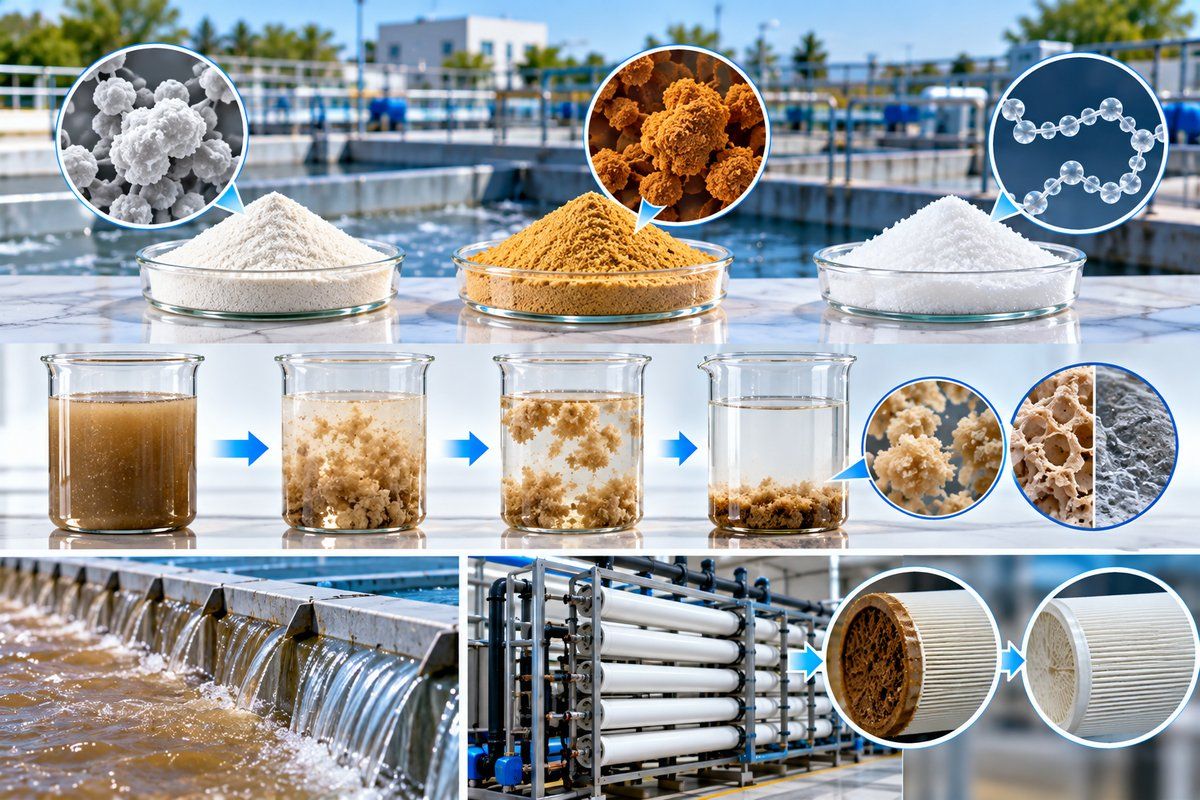
A typical treatment sequence may include:
- Equalization of municipal secondary effluent or raw reuse water
- PAC or PAFC dosing under rapid mixing
- Polymer flocculant addition under controlled slow mixing
- Clarification, sedimentation, lamella separation, or dissolved air flotation
- Media filtration or direct UF treatment
- UF permeate monitoring and RO feed SDI testing
- Cartridge filtration before RO, where required
Proper coagulation can reduce colloidal load before the UF stage, allowing longer filtration cycles and lower backwash demand. Stable UF permeate quality then supports lower RO SDI and reduced particulate fouling.
For plants experiencing severe wet-season turbidity, operators may need a flexible chemical strategy, including automatic dose adjustment based on online turbidity, streaming current, UV254, flow, or particle-count measurements.
Why Dose Point, pH, and Mixing Matter
Even the best Poly Aluminium Chloride product can underperform if it is added at the wrong location or mixed poorly.
PAC should usually be injected at a point with rapid and uniform dispersion. This allows the coagulant to contact particles before hydrolysis reactions are complete. Insufficient mixing creates localized overdose zones and uneven floc formation. Excessive high-shear mixing after floc formation can break flocs apart.
Polymer should generally be added after primary particle destabilization. It requires gentler mixing to promote particle bridging without destroying formed flocs. Polymer solution preparation is equally important: powder polymers need proper wetting, aging, dilution, and mixing to achieve full activity.
pH and alkalinity strongly influence coagulation. While PAC has a relatively broad operating range, the optimum pH depends on water chemistry and treatment targets. Operators should monitor pH before and after dosing, particularly during storm inflow, industrial discharge changes, or seasonal transitions.
Balancing Effluent Quality, Sludge Volume, and Chemical Cost
The lowest turbidity is not always the lowest-cost operating point. Excess coagulant may improve a laboratory turbidity result while increasing sludge production, residual metal concentration, and chemical expenditure.
A practical optimization program should track:
- Raw-water turbidity, color, pH, alkalinity, and organic load
- Clarified-water turbidity
- UF TMP, backwash frequency, and permeability
- UF permeate turbidity
- RO feed SDI
- RO differential pressure and normalized flow
- Coagulant and polymer consumption
- Sludge volume, solids content, and disposal cost
The correct program is one that protects UF and RO performance while minimizing total cost per cubic meter of reuse water—not simply chemical cost per kilogram.
Get a UF/RO Pretreatment and SDI Reduction Program
Seasonal turbidity spikes do not have to compromise municipal reuse reliability. A tailored program using Poly Aluminium Chloride, PAFC where appropriate, and a compatible water treatment flocculant can stabilize clarification, improve UF performance, and protect RO membranes from colloidal fouling.
Request a UF/RO pretreatment coagulation optimization and SDI reduction program for your Peru water reuse facility. Provide seasonal water-quality data, current PAC and polymer dosages, UF operating trends, RO feed SDI results, and sludge-handling constraints. Our technical team can recommend a site-specific chemical treatment strategy for reliable municipal water reuse.