
Iron and Manganese Fouling in African Borehole RO Systems: Pretreatment Chemicals That Protect Membrane Performance
ON
Borehole water is a critical lifeline across Sub-Saharan Africa, supplying commercial bottling plants, industrial parks, agricultural schemes, and community drinking water projects. In regions like Kenya’s Rift Valley, Nigeria’s commercial hubs, and Tanzania’s coastal and inland plains, groundwater is often the only reliable year-round water supply.
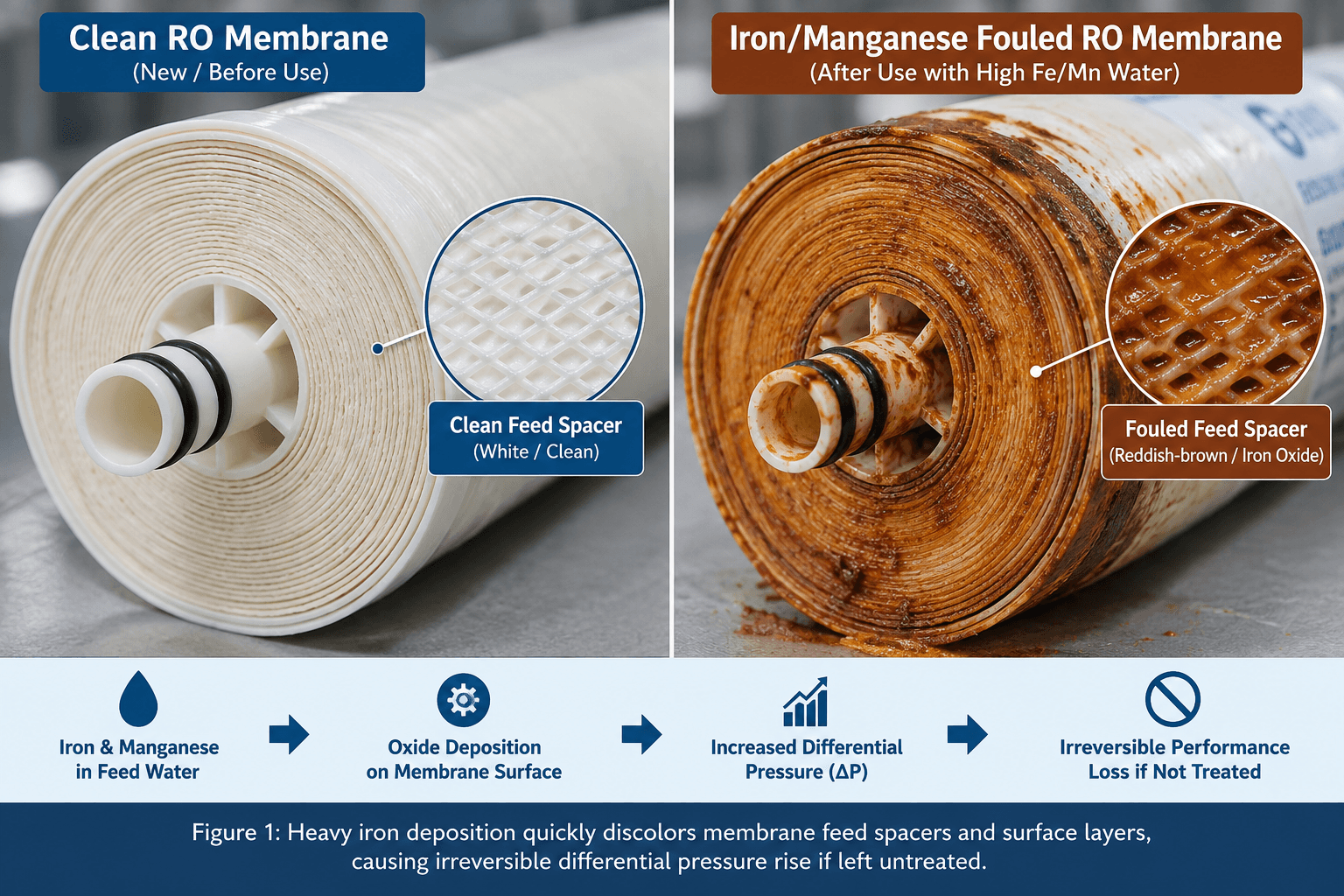
However, groundwater in these regions is rarely pure. Deep well water frequently carries elevated levels of dissolved iron (Fe2+), manganese (Mn2), silica, and high calcium/magnesium hardness. When groundwater is fed directly or with inadequate pretreatment into Reverse Osmosis (RO) systems, operators encounter rapid membrane degradation: membranes turn dark yellow or reddish-brown, differential pressure (ΔP) spikes within days, and permeate flow drops drastically.
Protecting RO membranes from metal fouling requires a coordinated approach combining the right iron removal coagulant, proper oxidation/filtration staging, and specialized RO membrane cleaning chemicals.
The "Iron + Manganese + Hardness" Challenge in African Borehole Projects
In deep aquifer conditions, iron and manganese exist primarily in soluble, reduced states (ferrous Fe2+ and manganous Mn2), keeping the pumped water clear initially. However, the moment this water reaches the surface, it undergoes partial aeration in balance tanks or encounters dissolved oxygen, chlorine, or oxidizing biocides.
This triggers rapid oxidation:
- Ferrous iron (Fe2+) oxidizes to insoluble ferric hydroxide (Fe(OH)3) and iron oxide (Fe2O3).
- Manganous manganese (Mn2+) oxidizes to black manganese dioxide (MnO2), albeit more slowly and at a higher pH.
Compounding the problem in borehole water treatment in Africa is the coexistence of high total hardness (Ca2+,Mg2+) and alkaline bicarbonate. When iron oxides precipitate alongside calcium carbonate (CaCO3) scale, they form a dense, cement-like hybrid fouling layer that is exceptionally difficult to remove.
How Iron and Manganese Oxides Cripple Filters and RO Membranes
Uncontrolled metal fouling damages water treatment assets at multiple stages:
- Multimedia Filters (MMF): Colloidal iron blinds filter media prematurely, causing channeling and carryover of sub-micron colloidal metal particles into downstream cartridge filters.
- Ultrafiltration (UF): Metal oxides coat the porous membrane fibers, driving up transmembrane pressure (TMP) and demanding frequent chemical-enhanced backwashes (CEB).
- Cartridge 5-Micron Filters: Rapidly turn orange/brown and plug within days instead of months, adding substantial consumable costs.
- RO Membranes: Once colloidal or dissolved iron enters the RO feed spacer, crossflow velocity forces it to drop out on the feed spacer and polyamide surface. This causes:
- Rapid increase in feed-to-concentrate differential pressure.
- Sharp decline in normalized permeate flux.
- Potential physical damage to the thin-film polyamide layer.
- Catalytic degradation: In the presence of residual oxidants (like chlorine), iron acts as a catalyst accelerating polyamide membrane oxidation.
Selecting Coagulants: PAC vs. PFS in Groundwater Pretreatment
To remove oxidized colloidal iron and seasonal borehole turbidity before the RO array, selecting the proper inorganic coagulant is vital:
- Poly Aluminium Chloride (PAC): PAC is the preferred iron removal coagulant and clarifier when upstream oxidation has already converted ferrous to ferric iron. PAC provides rapid charge neutralization and compact floc formation without introducing additional iron into the system. High-basicity PAC performs well across the typical pH ranges (6.5−8.2) of African groundwater.
- Polyferric Sulfate (PFS): While PFS is a powerful coagulant for surface water and organic color removal, using iron-based coagulants upstream of RO systems requires extreme caution. Any residual iron slippage from under-dosing, overdosing, or filter breakthrough will directly foul the RO membranes. Consequently, PAC or organic coagulants are generally safer choices for RO pretreatment.
The Correct Pretreatment Sequence
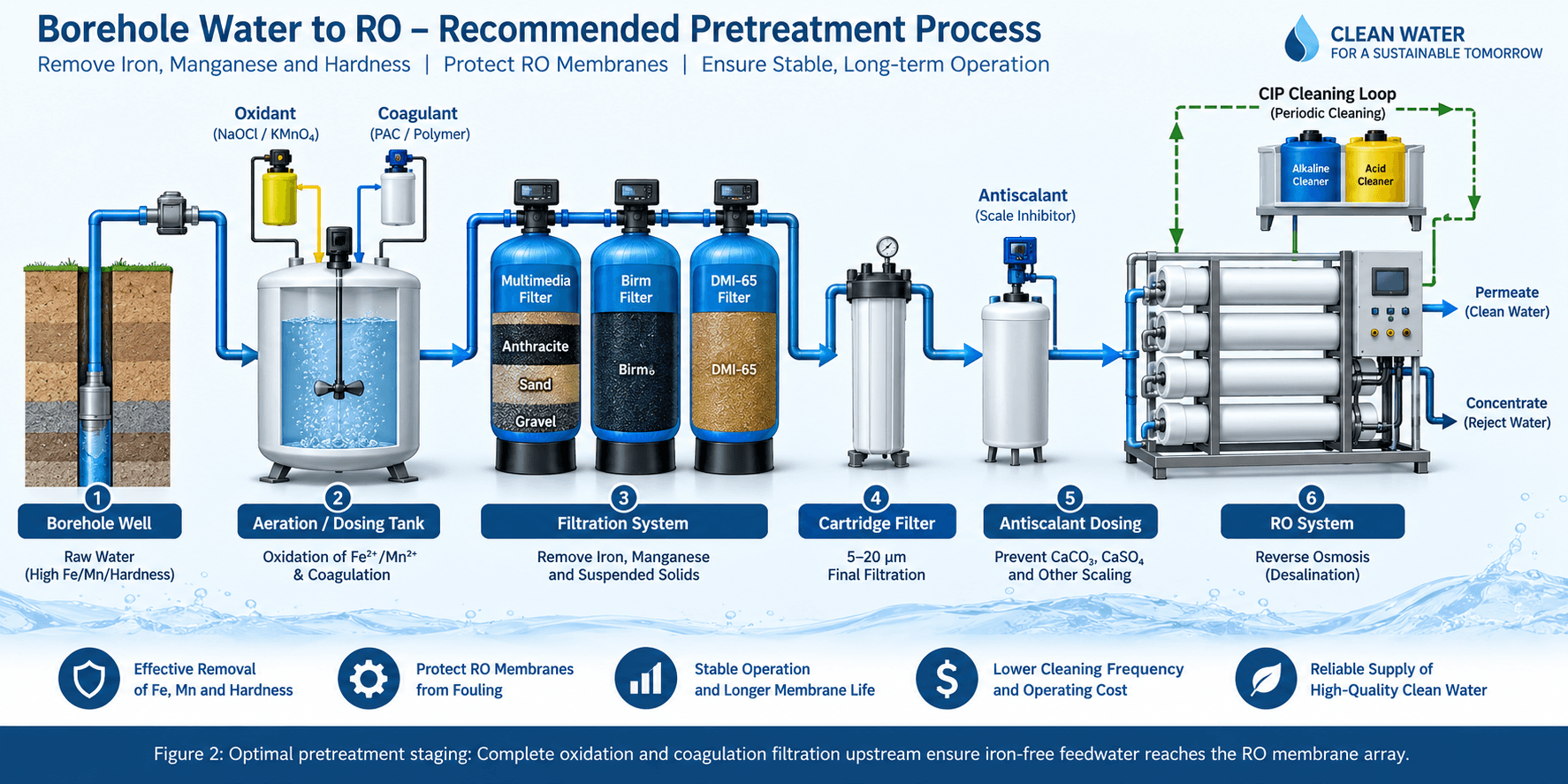
For high-iron, high-manganese groundwater desalination chemicals in Nigeria and municipal/industrial projects in Kenya, the chemical and physical sequence must follow a strict order:
Oxidation⟶Coagulation & Flocculation⟶Depth Filtration⟶Dechlorination⟶Antiscalant Dosing⟶RO
- Oxidation: Convert Fe2+ and Mn2+ completely into insoluble particulates using aeration, sodium hypochlorite (NaOCl), potassium permanganate (KMnO4), or catalytic media (such as manganese greensand or DMI-65).
- Coagulation / Filtration: Dose PAC upstream of multimedia filtration to aggregate fine colloidal oxides into settleable, filterable flocs.
- Dechlorination / Reducing Agent: If free chlorine was used as the oxidant, dose Sodium Metabisulfite (SMBS) before the RO to protect polyamide membranes from oxidative damage.
- Antiscalant Dosing: Apply a specialty phosphonate or polymeric RO antiscalant designed to tolerate trace iron while controlling high calcium carbonate and sulfate scaling.
Remediation: Citric Acid and Low-pH Cleaners for Iron & Carbonate Scale
When iron manganese RO fouling in Kenya or elsewhere does occur, routine high-pH alkaline cleanings (targeting biofouling/organics) will fail to resolve the problem and may even fix metal hydroxides more tightly to the surface.
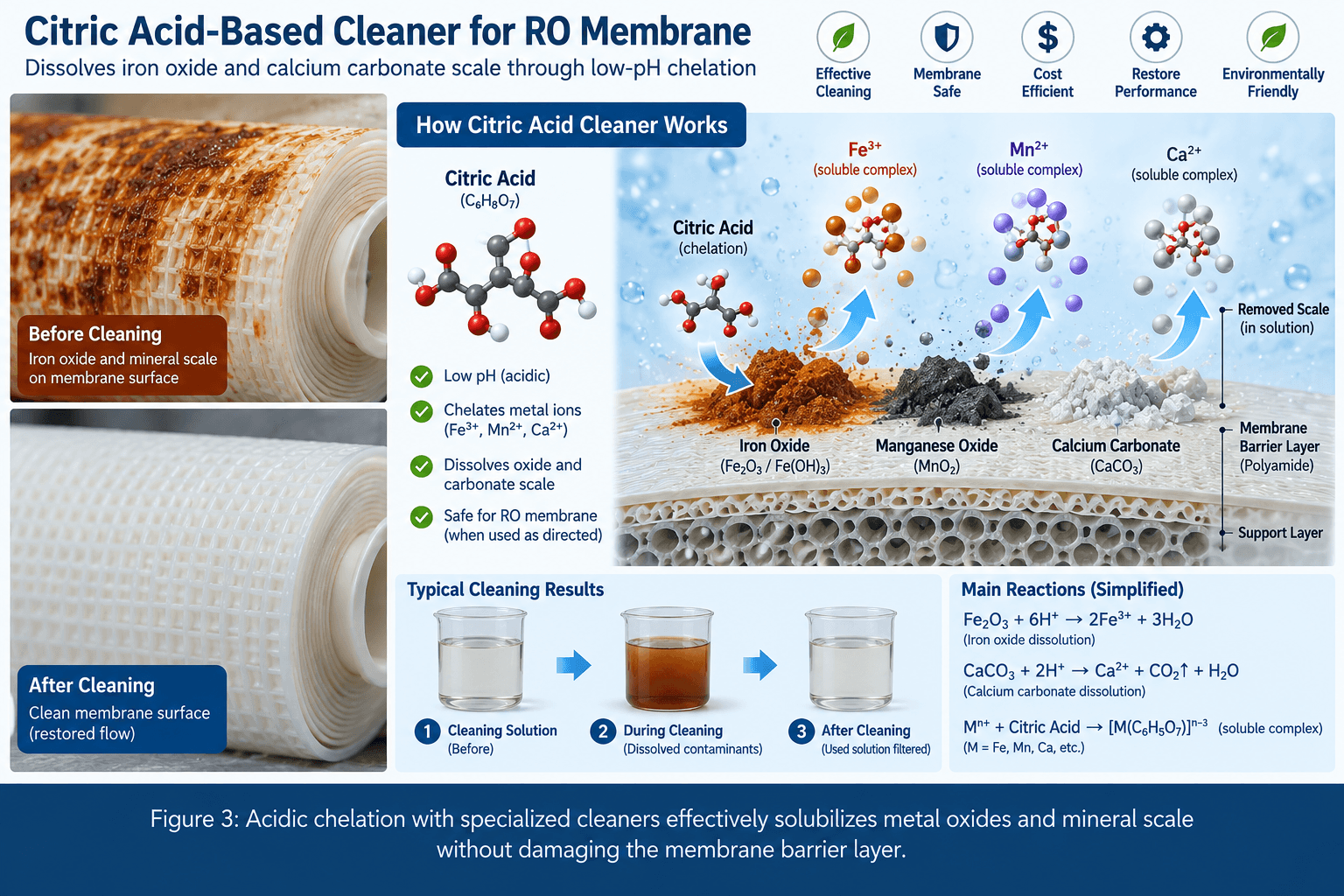
Instead, a dedicated acidic Clean-In-Place (CIP) regimen is required using specialized RO membrane cleaning chemicals:
- Citric Acid-Based Formulations (Low pH 2.5 – 3.0): Citric acid acts both as a mild acid and a strong chelating agent. The carboxylate groups bind ferric (Fe3+) and manganous ions into soluble ring complexes, stripping iron oxide crusts from the membrane surface while dissolving CaCO3 crystals.
- Formulated Iron Removers: For severe metal fouling, formulated specialty acidic cleaners containing supplementary reducing agents (e.g., sodium hydrosulfite) and targeted surfactants speed up the dissolution of stubborn Fe2O3 and MnO2 deposits far more effectively than generic citric acid alone.
Key CIP Rule: Always perform the low-pH (iron and scale removal) clean first if metal fouling is the dominant problem, followed by a thorough flush, and then a high-pH clean if organic or biofilm fouling is also present.
How to Prevent Iron Fouling from Returning
To ensure long-term, stable RO performance on African borehole water:
- Maintain continuous SDI monitoring: Ensure Silt Density Index (SDI15) remains below 3.0 (and total iron <0.05 mg/L) in the RO feed stream.
- Avoid dead legs in raw water piping: Stagnant water lines promote unmonitored bacterial iron oxidation and particulate accumulation.
- Automate coagulant dosing: Match PAC dosing proportionally to feed water flow and raw turbidity swings.
- Use dedicated metal-tolerant antiscalants: Select antiscalant chemistry formulated to disperse trace polyvalent metal ions and prevent them from seeding scale crystals.
Get a Custom Pretreatment & Cleaning Program for Your Borehole RO System
Struggling with rapid membrane yellowing, high cartridge filter turnover, or high differential pressure in your borehole RO installation?
Contact Oneschem's technical team today. Share your raw borehole water analysis (Fe, Mn, Hardness, Silica, TDS, and pH), and we will engineer a site-specific pretreatment and chemical cleaning protocol—including high-basicity PAC coagulants, metal-tolerant RO antiscalants, and high-potency RO membrane cleaning chemicals designed for demanding African groundwater applications.