
How to Maintain Consistent AFFF Quality Across Large Production Batches
ON
Supplying firefighting foam for major industrial tenders is very different from producing small, standalone orders. When a refinery, tank farm, airport, or petrochemical complex awards a contract, the order may span tens or hundreds of thousands of liters delivered across dozens of production batches. Every drum and IBC must proportion accurately and perform identically in the field.
Achieving reliable AFFF quality consistency at scale requires disciplined water chemistry control, standardized raw material testing, and tight manufacturing tolerances. Even minor shifts in surfactant activity, residual salt levels, or mixing conditions can cause noticeable differences in viscosity, foam expansion, or storage stability from one batch to the next.
Why Batch-to-Batch Consistency Matters in Oil and Gas Projects
Large oil and gas facilities rely on fixed proportioning systems—such as balanced-pressure bladder tanks, in-line inductors, and foam pumps—calibrated for a specific concentrate viscosity and density. Furthermore, during a major commissioning test or emergency response, multiple batches of foam concentrate are often poured into the same bulk storage tank.
If batch-to-batch properties drift:
- Proportioning equipment may under-dose or over-dose the concentrate.
- Mixing different batches in a single storage tank can trigger cloudiness, sediment, or gel formation.
- Third-party inspection agencies may reject an entire shipment if random drum sampling shows inconsistent physical or fire-test results.
- Long-term storage stability under hot warehouse conditions may become unpredictable.
Common Causes of Foam Concentrate Performance Variation
From a chemical processing standpoint, most batch variations trace back to a handful of controllable factors:
- Process water fluctuations: Using municipal tap water without consistent deionization introduces variable levels of calcium, magnesium, iron, and chloride, which directly affect surfactant solubility and cloud point.
- Active-matter drift in surfactants: Commercial surfactants are supplied as aqueous solutions with a specified solids range (e.g., 28–32%). Charging by gross weight without adjusting for actual active content alters the surfactant ratio in the final formula.
- Uncontrolled pH and electrolyte carry-over: Variations in byproduct salts (such as sodium chloride) in amphoteric or anionic surfactants can shift concentrate viscosity and seawater tolerance.
- Inconsistent mixing and hydration: In AR-AFFF production, improper dispersion temperatures or shear rates during biopolymer hydration lead to wide swings in Brookfield viscosity and suspension stability.

Controlling Fluorosurfactant Dosage and Raw Material Quality
Because fluorosurfactants are the highest-value functional additives in AFFF and AR-AFFF, formulators typically operate within a narrow dosage window. Under-dosing increases aqueous surface tension and compromises spreading and vapor suppression on hydrocarbon fuels; over-dosing adds unnecessary cost and can disturb the delicate balance with hydrocarbon co-surfactants.
To keep performance locked in across large campaigns:
- Dose fluorosurfactants based on verified active solids rather than nominal drum weight when raw material COA values vary.
- Ensure complete homogenization and rinse transfer lines thoroughly so high-density fluorosurfactant concentrates are not left behind in hoses or pumps.
- Maintain a fixed ratio between the fluorosurfactant and the primary hydrocarbon foaming agents to preserve micelle stability.
Incoming Raw Material Inspection for Firefighting Foam Factories
Effective firefighting foam batch control begins before raw materials ever reach the blending vessel. Relying solely on a supplier’s Certificate of Analysis (COA) without verification can allow off-spec ingredients into production.
Every incoming lot of fluorosurfactant, hydrocarbon surfactant, glycol solvent, and polymer should undergo a targeted gatekeeping check:
- Appearance and clarity: Inspect for phase separation, crystallization (common in cold weather), or suspended matter.
- Non-volatile solids / refractive index (Brix): Quickly confirm active concentration.
- pH and specific gravity: Verify alignment with historical baseline data.
- Surface tension screening: Test the fluorosurfactant at a standard dilution (e.g., 0.1% in deionized water) to confirm surface activity.
- Chloride and divalent ion checks: Ensure low salt carry-over in key surfactant raw materials.
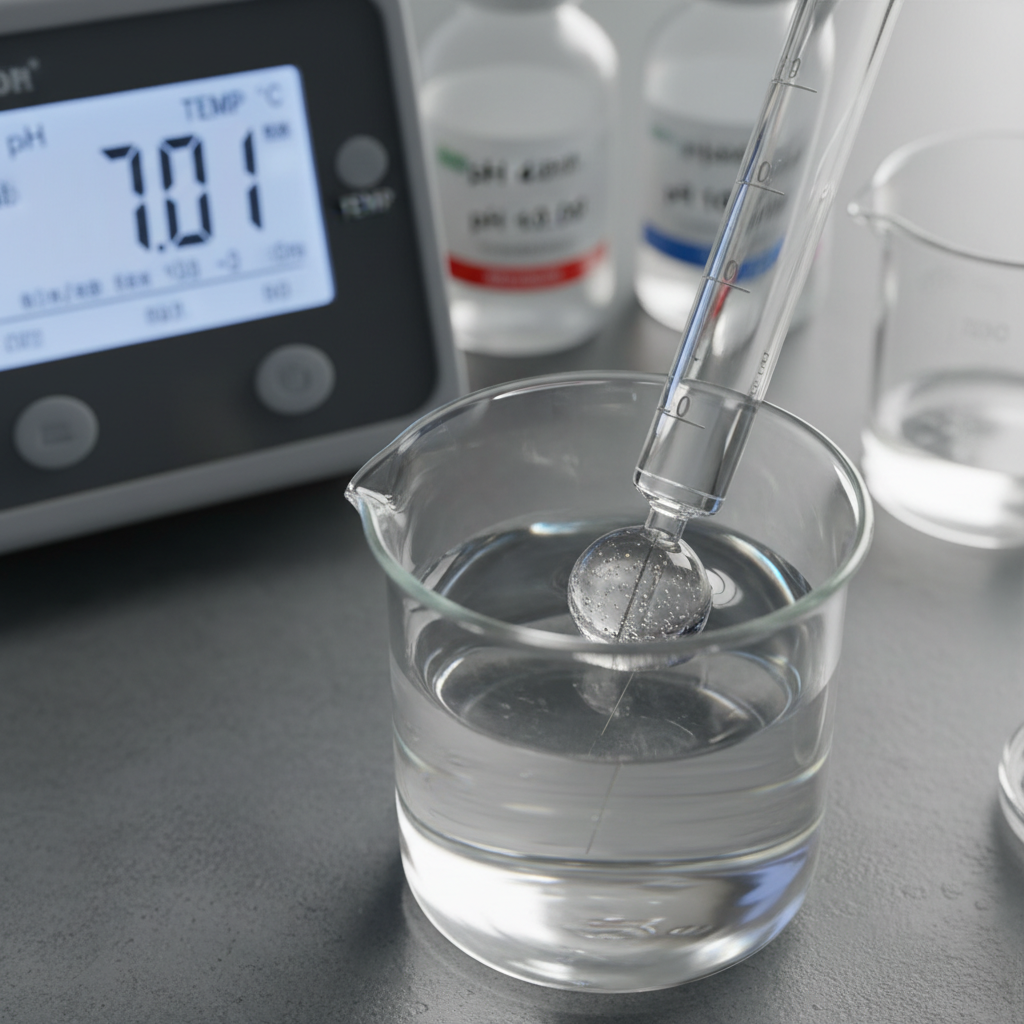
Foam Expansion, Drainage Time and Burnback Resistance Testing
Physical property checks (pH, viscosity, density, refractive index) are necessary but insufficient on their own. Two batches with identical pH and viscosity can still behave differently when aerated through a nozzle.
A robust factory release protocol for each batch should include functional evaluation in both freshwater and synthetic seawater (where applicable):
- Surface and interfacial tension: Confirm rapid tension reduction against standard hydrocarbon test fluids (such as cyclohexane or heptane) to verify spreading potential.
- Foam expansion ratio and 25% drainage time: Measure using standardized laboratory foam-generation equipment to confirm bubble structure and liquid retention.
- Film formation and Small-Scale Fire Testing: Periodically conduct pan-fire knockdown, fuel-shedding, and burnback resistance tests to verify that the complete surfactant and polymer package performs under thermal stress.
Building a Quality-Control System for AFFF and AR-AFFF Production
To eliminate operator-dependent variation across shifts, foam manufacturers should implement a structured QC system:
- Deionized water standard: Mandate DI water (e.g., conductivity < 10 µS/cm) for all production batches.
- Automated load-cell dosing and standardized SOPs: Lock in addition sequence, agitation speed (avoiding air entrainment during blending), and batch temperature.
- In-process hold points: Check pH, refractive index, and viscosity before drumming.
- Retained sample library: Store sealed reference samples from every batch under both ambient and elevated temperatures (e.g., 50°C accelerated aging for strategic lots) to monitor long-term stability and support customer traceability.

How Stable Supply Supports Project-Based Foam Manufacturers
Even the strictest factory QC cannot fully compensate for an erratic raw material source. Switching fluorosurfactant grades—or buying from traders who blend lots from different origins—forces constant reformulation and puts project approvals at risk.
Partnering with a dedicated fluorosurfactant supplier simplifies multi-batch production. When your supplier maintains tight synthesis specifications, consistent isomer/homolog profiles, predictable lead times, and full lot traceability, your production team can run standard formulas with confidence.
ONESCHEM works closely with industrial firefighting foam manufacturers to support reliable, large-scale AFFF and AR-AFFF production. We provide consistent fluorosurfactant raw materials backed by comprehensive batch documentation (COA, TDS, SDS), pre-shipment sampling, and technical formulation support. Contact our team to discuss your upcoming production requirements.