
How Middle East Foam Manufacturers Can Improve AFFF Performance Under Extreme Heat
The Middle East is one of the world’s most demanding markets for firefighting foam concentrates. Refineries, petrochemical plants, tank farms, airports, marine terminals, and offshore facilities require reliable fire protection systems that can operate after prolonged exposure to extreme heat.
For manufacturers of Aqueous Film-Forming Foam (AFFF), high ambient temperatures can create serious formulation and quality-control challenges. A foam concentrate that performs well in a controlled laboratory may show phase separation, viscosity drift, reduced foam expansion, or inconsistent film-forming behavior after storage in warehouses, containers, or project sites exposed to temperatures above 40°C.
To produce reliable AFFF for hot climate applications, manufacturers must carefully evaluate surfactant compatibility, fluorosurfactant selection, water quality, solvent balance, packaging, and accelerated aging performance. This article explains how Middle East firefighting foam manufacturers can improve formulation stability and maintain consistent product quality under extreme heat conditions.
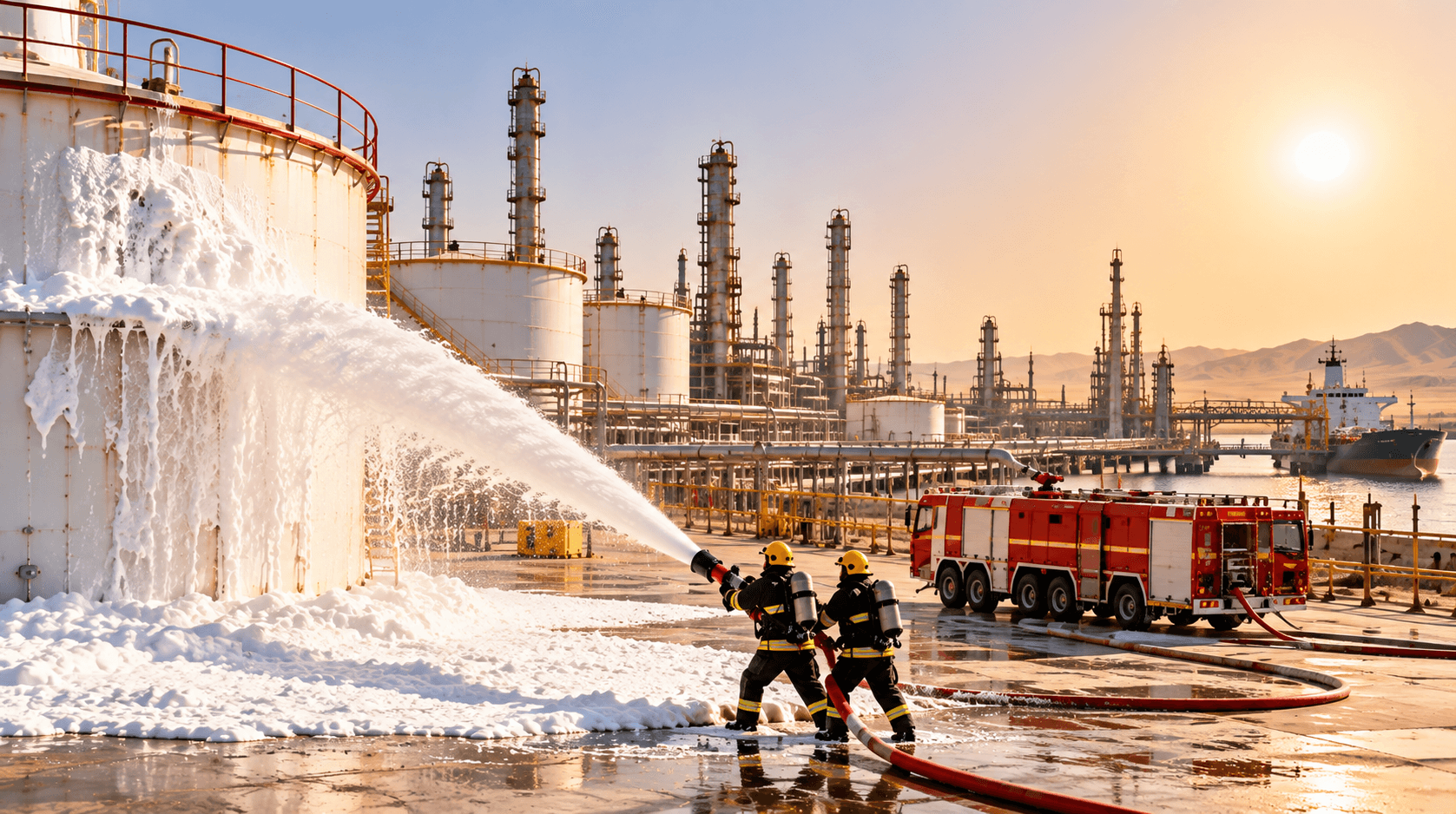
Extreme Heat Challenges for Firefighting Foam Concentrate Storage
In many Middle East locations, summer temperatures can remain above 40°C for long periods. Inside metal storage containers, unventilated warehouses, or transportation vehicles, temperatures may be significantly higher than the outdoor ambient temperature.
These conditions can affect firefighting foam concentrates in several ways:
- Increased evaporation or loss of volatile solvent components
- Higher viscosity or viscosity instability
- Phase separation between surfactants, solvents, polymers, and additives
- Reduced solubility of certain raw materials
- Precipitation or haze formation
- Changes in foam expansion and drainage time
- Reduced consistency between production batches
- Greater risk of incompatibility in complex AFFF or AR-AFFF formulations
For refinery, oil terminal, and petrochemical applications, foam concentrate consistency is critical. If the concentrate does not proportion correctly through the foam system, the final foam blanket may not deliver the required expansion, drainage, spreading, or vapor-suppression characteristics.
Therefore, heat stability should not be treated as a secondary laboratory test. It should be part of the formulation development process from the earliest raw material screening stage.
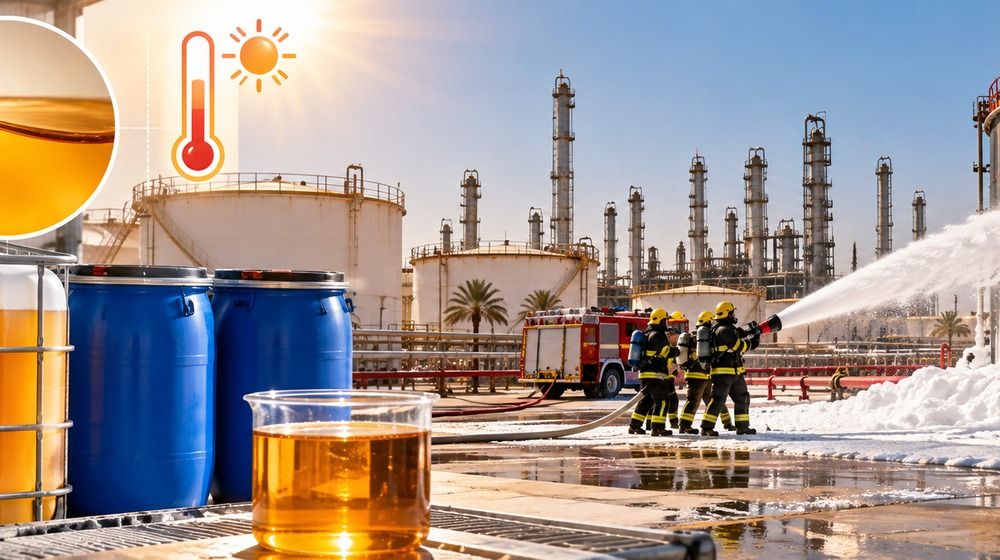
How High Temperatures Influence Fluorosurfactant Performance
A fluorosurfactant is a key functional component in many film-forming firefighting foam formulations. In AFFF systems, fluorosurfactants help reduce surface tension and support rapid spreading across hydrocarbon fuel surfaces. They also contribute to the formation and stability of the aqueous film associated with AFFF performance.
However, not all fluorinated surfactants behave the same way under high-temperature storage conditions. A fluorosurfactant for AFFF must be evaluated not only for initial surface tension reduction, but also for its compatibility with the complete formulation.
At elevated temperatures, potential issues may include:
- Reduced compatibility with hydrocarbon surfactants
- Interaction with solvents or hydrotropes
- Phase instability in high-electrolyte systems
- Changes in solution clarity
- Foam expansion variation after aging
- Performance differences when diluted with hard water or seawater
For firefighting foam Middle East applications, formulators should evaluate fluorosurfactants under actual expected storage conditions. A raw material that looks stable at room temperature may not provide the same performance after several weeks of elevated-temperature aging.
The best approach is to compare candidate fluorosurfactants in the final AFFF formulation rather than relying only on individual product data. Surface tension, appearance, viscosity, foam expansion, drainage time, and compatibility should all be measured before and after heat-aging tests.
Preventing Phase Separation and Viscosity Drift in AFFF
Phase separation is one of the most common concerns in high-temperature foam concentrate storage. It can appear as a visible upper or lower layer, cloudiness, sediment, gel formation, or a noticeable change in product viscosity.
Several factors may contribute to this problem:
1.Incompatible surfactant combinations
Fluorosurfactants, hydrocarbon surfactants, amphoteric surfactants, and other components must remain compatible across the intended temperature range.
3.Incorrect solvent balance
Solvents and hydrotropes are often used to improve solubility and low-temperature flowability. However, an unsuitable solvent system may contribute to instability under high heat.
4.Water quality variation
Calcium, magnesium, iron, chloride, and other dissolved ions can influence surfactant performance. Water treatment and deionized water control are important during foam concentrate manufacturing.
4.Excessive electrolyte content
Certain salts, corrosion inhibitors, and additives can reduce surfactant solubility and increase the possibility of separation.
5.Polymer interactions in AR-AFFF
In alcohol-resistant foam formulations, polymer selection and addition sequence are especially important. Incompatible fluorosurfactants or incorrect mixing conditions can lead to excessive viscosity, gel particles, or instability.
To reduce viscosity drift, manufacturers should establish a controlled mixing procedure, including raw material addition order, mixing temperature, agitation speed, and filtration requirements. Each production batch should be checked for appearance, pH, viscosity, density, and foam performance.
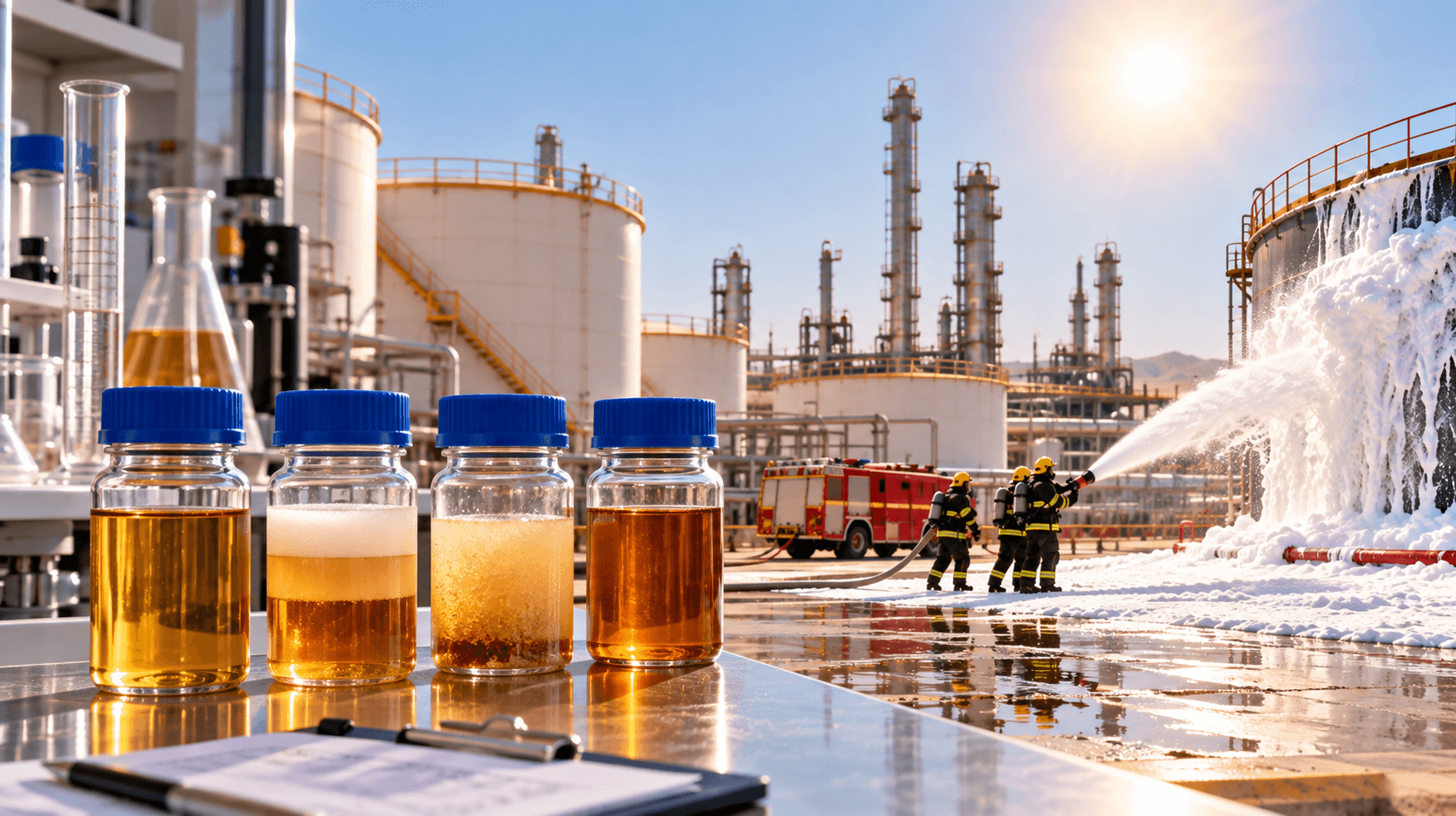
Selecting Fluorosurfactants for Refinery and Oil Terminal Applications
Refineries and oil terminals present high-risk hydrocarbon fire scenarios. Foam concentrates used in these environments must be designed for reliable performance after storage and transport in harsh conditions.
When selecting a fluorosurfactant for AFFF, manufacturers should consider the following factors:
- Ability to reduce static and dynamic surface tension
- Compatibility with the full surfactant package
- Stability in high-temperature storage
- Suitability for freshwater, hard water, or seawater dilution
- Contribution to foam expansion and drainage performance
- Compatibility with corrosion inhibitors and solvents
- Batch-to-batch consistency
- Availability of SDS, TDS, COA, and regulatory documentation
- Supplier technical support during formulation trials
It is also important to remember that the lowest raw material dosage does not always create the most stable formula. AFFF manufacturers should optimize the entire formulation based on performance, stability, supply reliability, and target project requirements.
Recommended Accelerated Heat-Aging Evaluation Methods
Accelerated aging is essential when developing AFFF for hot climate conditions. While testing procedures should follow applicable customer, project, or regulatory requirements, a practical internal evaluation program may include:
- Storage at elevated temperature, such as 50°C or higher, for a defined period
- Visual inspection for separation, haze, sediment, or color change
- Viscosity measurement before and after aging
- pH and density comparison
- Surface tension testing
- Foam expansion ratio testing
- 25% drainage time evaluation
- Foam performance testing using the intended dilution water
- Freshwater, hard-water, and seawater compatibility testing where relevant
- Freeze-thaw testing if products may also be transported through cooler regions
Testing should be conducted on both laboratory batches and pilot-scale production batches. This helps identify issues caused by scale-up, mixing equipment, raw material addition sequence, or manufacturing water quality.
Packaging and Storage Recommendations for Foam Raw Materials
Proper raw material handling is also essential for stable AFFF production. Fluorosurfactants and other foam raw materials should be stored in accordance with supplier recommendations.
For Middle East manufacturers, practical precautions include:
- Store materials in shaded, ventilated warehouses whenever possible
- Avoid direct sunlight and excessive heat exposure
- Keep drums, IBCs, and containers tightly sealed
- Rotate inventory using first-in, first-out practices
- Inspect materials before use for separation or visible abnormalities
- Avoid contamination during transfer and blending
- Maintain batch traceability from incoming materials to finished foam concentrate
- Use clean process water with controlled hardness and impurity levels
A robust storage and quality-control program reduces the risk of performance variation caused by raw material degradation or inconsistent manufacturing conditions.
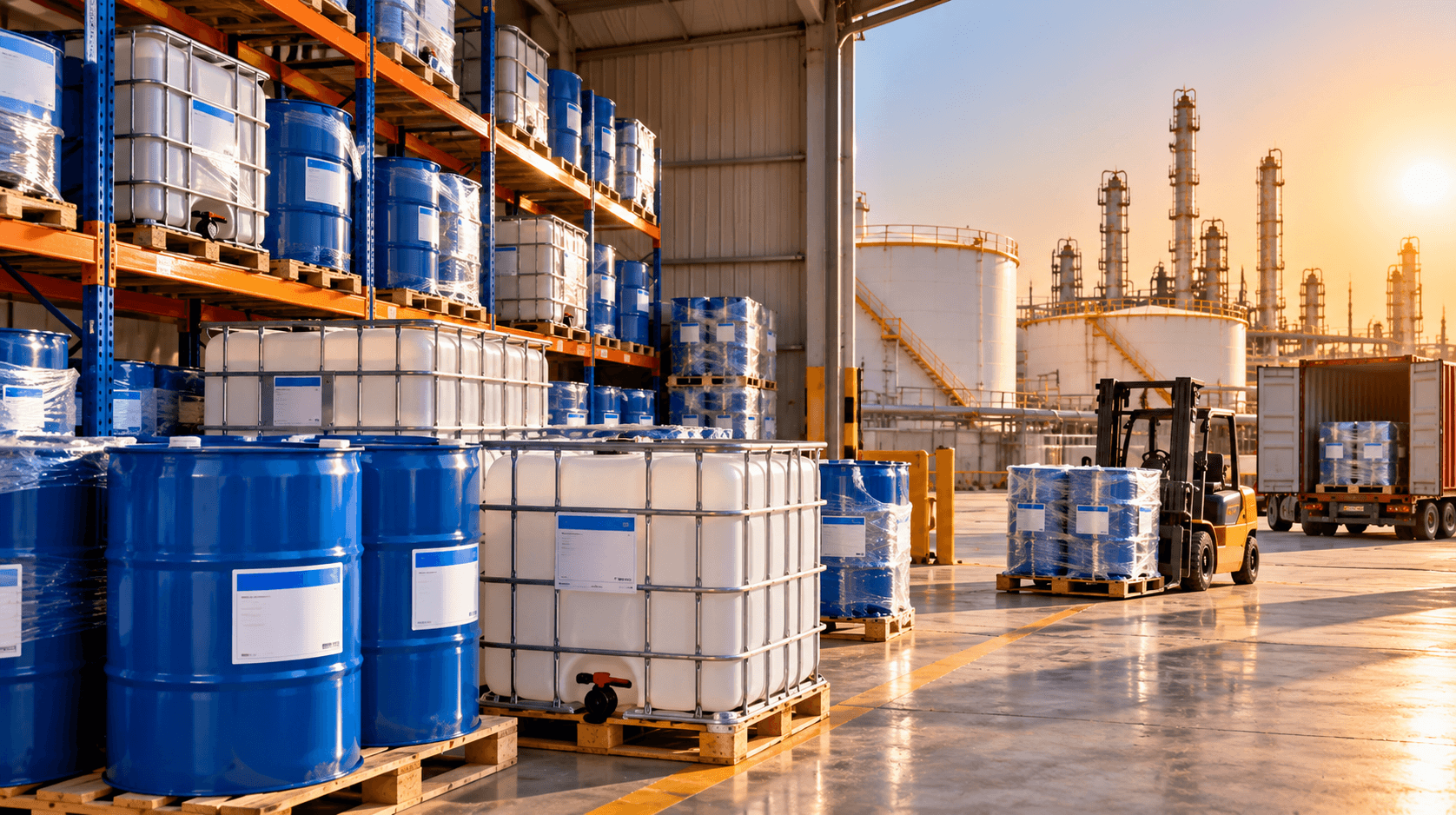
Technical Support for Middle East AFFF Manufacturers
Manufacturing reliable firefighting foam for Middle East projects requires more than purchasing a surfactant. It requires formulation knowledge, heat-aging evaluation, water quality control, stable supply, and technical cooperation between the foam manufacturer and raw material supplier.
ONESCHEM supports firefighting foam manufacturers with fluorosurfactant solutions for AFFF and related foam concentrate applications. Our technical team can assist with product selection, compatibility evaluation, technical documentation, samples, and formulation screening for high-temperature storage conditions.
If you are developing AFFF for hot climate applications or seeking a stable fluorosurfactant for AFFF production, contact ONESCHEM to request TDS, SDS, COA, samples, or technical support.