
Fluorosurfactant Selection for AR-AFFF Used in Palm Oil, Chemical and Tank Farm Fire Protection
ON
Southeast Asia has a high concentration of palm oil processing plants, chemical facilities, fuel terminals, refineries, and industrial tank farms. These sites may store both hydrocarbons and water-miscible polar solvents, creating complex fire-protection requirements. Foam manufacturers serving these industries must therefore develop concentrates that provide reliable performance on the specific fuels identified in each facility’s risk assessment.
Alcohol-Resistant Aqueous Film-Forming Foam, or AR-AFFF, is designed to address these demanding applications. However, its performance depends on the interaction between polymers, hydrocarbon surfactants, solvents, stabilizers, and the selected AR-AFFF fluorosurfactant. Choosing a fluorosurfactant based only on surface-tension data can result in unstable viscosity, poor foam quality, or inadequate fuel resistance.
Why AR-AFFF Is Critical for Polar-Solvent and Chemical Fire Risks
Conventional AFFF is primarily intended for hydrocarbon fuels. Polar solvents—including many alcohols, ketones, and other water-miscible chemicals—can attract water from a conventional foam blanket and rapidly destroy its structure.
AR-AFFF formulations contain a polymer system that forms a protective layer between the foam and the polar fuel. This barrier helps reduce direct contact, limit foam destruction, and support a more stable blanket. On suitable hydrocarbon fuels, the formulation may also deliver film-forming and vapor-suppression functions, subject to product design and test results.
This makes AR-AFFF relevant to chemical plants, solvent storage areas, fuel terminals, and mixed-risk tank farms. Palm oil itself is not a polar solvent, but palm oil facilities may also handle alcohols, fuels, processing chemicals, or other flammable liquids. Foam selection should always be based on the actual fuel inventory rather than the industry name alone.
Challenges Faced by Southeast Asian AR-AFFF Manufacturers
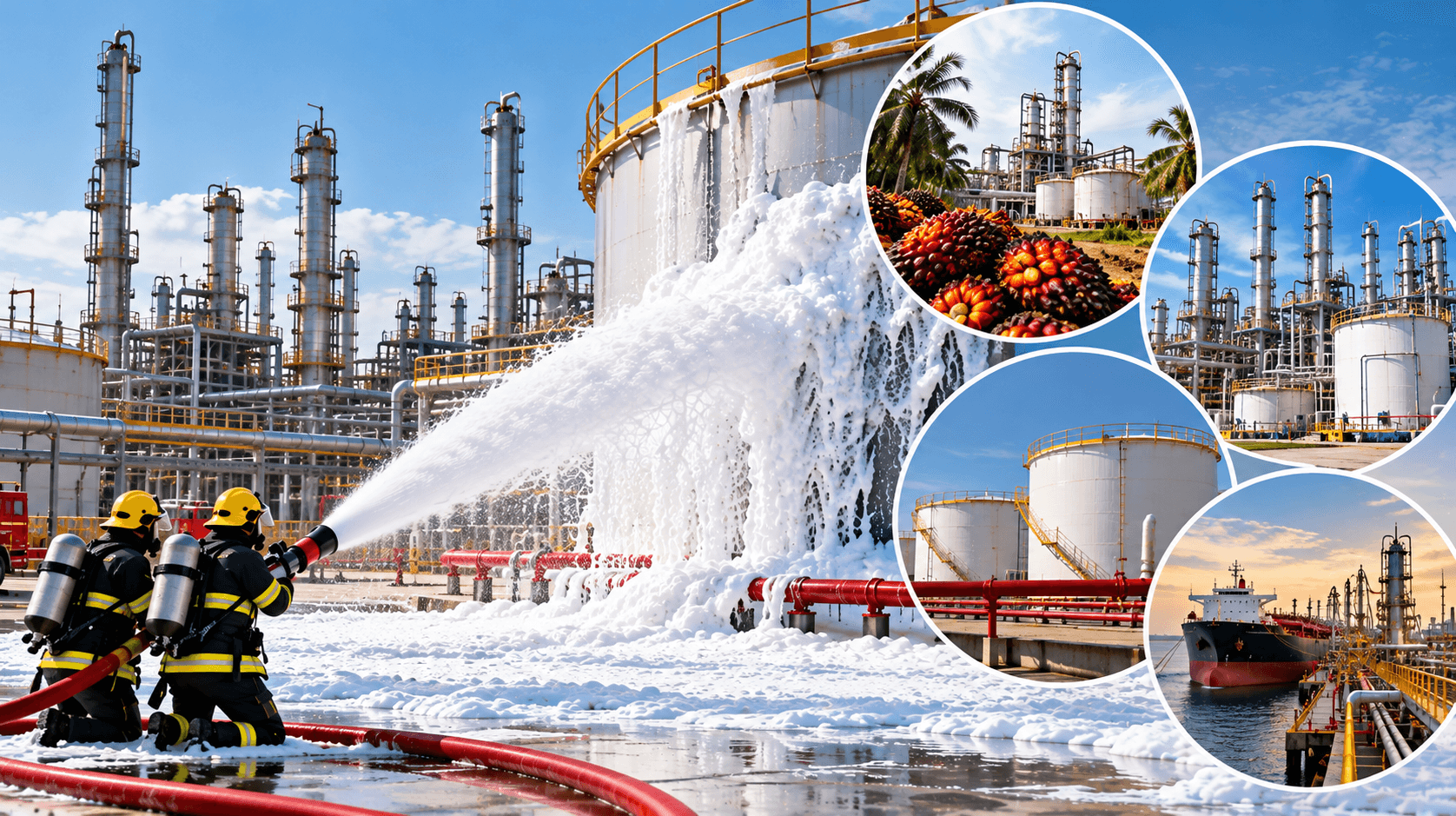
Regional foam producers must address several formulation and supply-chain problems. High ambient temperatures can cause viscosity drift, separation, haze, or reduced storage stability. Humid environments and long-distance transportation may place additional stress on finished concentrates.
Water quality is another concern. Hard water and seawater can affect surfactant solubility, foam expansion, drainage, and proportioning performance. This is particularly important for coastal tank farms, ports, marine terminals, and facilities that may use seawater as an emergency water source.
Manufacturers must also manage raw-material variability, imported-material lead times, and changing environmental requirements. Fluorinated firefighting foams are subject to increasing regulatory controls in many markets. Producers should verify the composition, documentation, and legal status of every raw material for the countries where the finished foam will be manufactured, sold, and used.
Fluorosurfactants in Fuel Shedding and Film-Forming Performance
A properly selected fluorosurfactant for alcohol resistant foam can reduce surface tension and help the foam solution spread. It may also improve fuel shedding—the ability of foam bubbles to resist retaining fuel droplets that can destabilize or ignite the blanket.
In AR-AFFF, however, fluorosurfactant performance cannot be evaluated independently of the polymer barrier. A product with excellent surface activity in water may behave differently when combined with polymers, hydrocarbon surfactants, glycols, salts, preservatives, and corrosion inhibitors.
Manufacturers should evaluate candidate fluorosurfactants in the complete concentrate and at the intended use concentration. Key measurements include:
- Static and dynamic surface tension
- Foam expansion and drainage time
- Fuel pickup and fuel-shedding behavior
- Film formation on relevant hydrocarbons
- Performance on specified polar solvents
- Freshwater, hard-water, and seawater compatibility
- Heat-aging and storage stability
- Batch-to-batch consistency
Laboratory screening is useful, but it does not replace fire testing under the applicable approval standard or end-user specification.
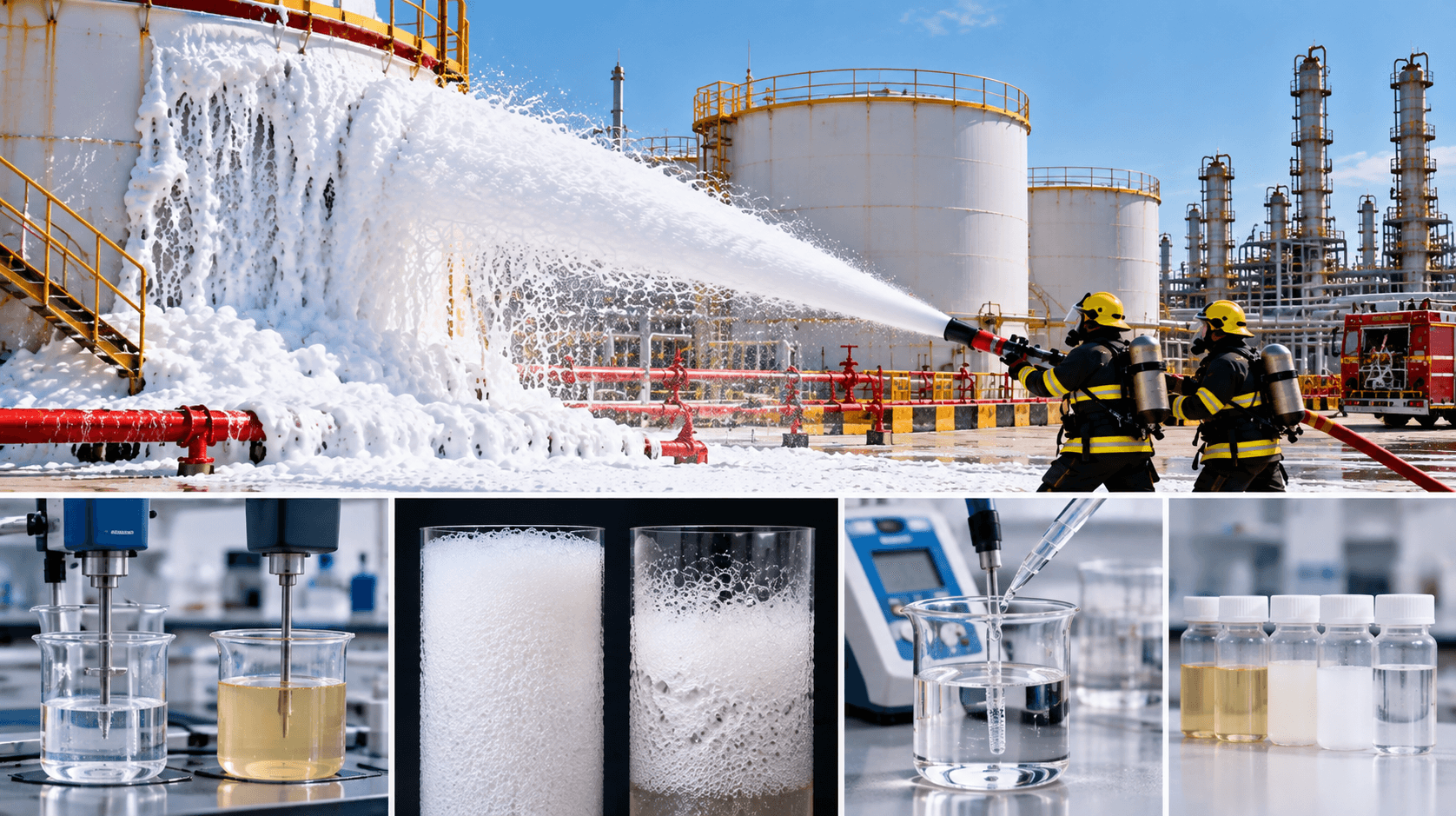
Balancing Polymer Compatibility and Fluorosurfactant Performance
The polymer system is essential to alcohol resistance, yet it can also introduce viscosity and compatibility problems. An unsuitable surfactant package may cause polymer precipitation, gel particles, excessive thickening, or phase separation.
The addition sequence and mixing conditions are equally important. Localized high concentrations, excessive shear, uncontrolled temperature, or incorrect pH may prevent proper polymer hydration. Manufacturers should define and document the order of addition, agitation rate, water quality, batch temperature, and hydration time.
The ideal AR-AFFF fluorosurfactant should support low surface tension while remaining compatible with the selected polymer over the full storage-temperature range. It should also allow the finished concentrate to proportion correctly through the intended equipment.
How to Avoid Foam Collapse in Alcohol-Resistant Formulations
Foam collapse can result from several factors rather than a single deficient ingredient. Common causes include:
- Insufficient polymer barrier formation on the target polar solvent
- Incompatible fluorosurfactant and hydrocarbon-surfactant combinations
- Excessive fuel contamination of the foam blanket
- Incorrect concentrate proportioning
- Poor water quality or excessive electrolyte content
- Improper application equipment or technique
- Raw-material deterioration during high-temperature storage
Troubleshooting should begin with controlled comparison tests. Check the concentrate’s appearance, pH, density, viscosity, surface tension, expansion, and drainage before evaluating fire performance. Tests should use the actual fuel, dilution water, equipment type, and application rate relevant to the intended project.
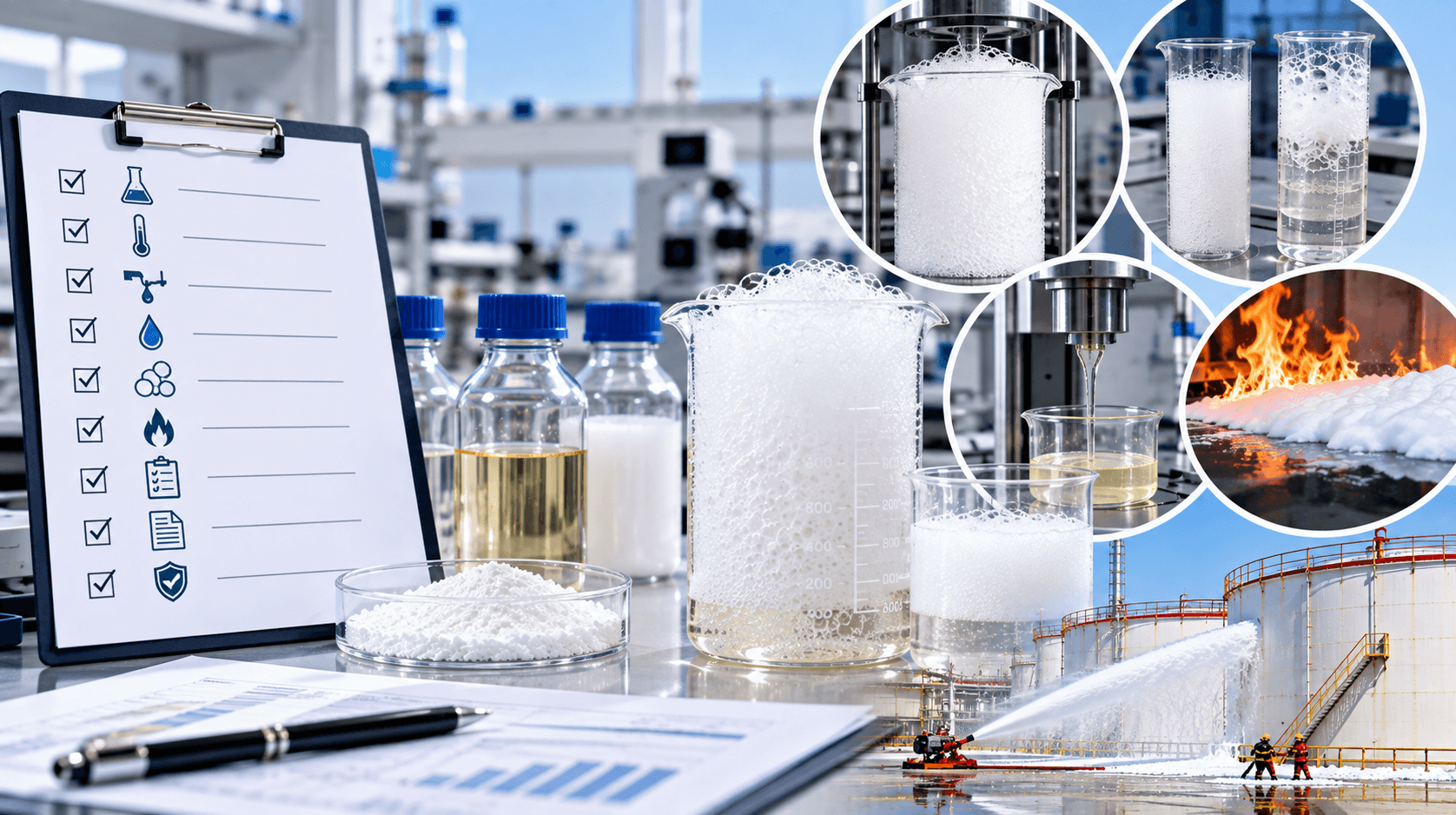
Formulation Screening Checklist for AR-AFFF Manufacturers
Before scaling up a new formula, manufacturers should confirm:
- Compatibility of all surfactants, polymers, solvents, and additives
- Stability at minimum and maximum expected storage temperatures
- Viscosity suitable for proportioning equipment
- Performance with freshwater and anticipated alternative water sources
- Foam expansion and drainage after aging
- Resistance to the specified hydrocarbons and polar solvents
- Pilot-batch consistency compared with laboratory samples
- Availability of TDS, SDS, COA, traceability, and regulatory declarations
- Compliance with applicable standards, approvals, and local restrictions
No raw material should be presented as guaranteeing certification. Approval applies to the tested finished foam concentrate, not to an individual ingredient.
Raw-Material Sourcing for Regional Foam Producers
A dependable supplier should offer more than a competitive price. Southeast Asian manufacturers should assess batch consistency, manufacturing capacity, lead time, export packaging, shelf-life information, technical documentation, and sample support.
Because fluorinated substances face evolving restrictions, buyers should request product-specific composition and regulatory information instead of relying on broad claims such as “environmentally safe” or “globally compliant.” Regional regulations, customer policies, wastewater management, containment, and disposal requirements must all be considered.
ONESCHEM supports manufacturers evaluating fluorosurfactants for AR-AFFF and tank farm firefighting foam applications. Contact our technical team to request a TDS, SDS, COA, evaluation sample, or compatibility discussion for your polymer and surfactant system. Final formulations should always be validated through qualified testing for their intended fuels, equipment, and market requirements.