
Flocculation Strategies for Difficult Inorganic Wastewater: Achieving Compliance with Lower Sludge
ON
Industrial wastewater from semiconductor, electronics, PCB, and electroplating operations is among the most challenging wastewater streams to treat. These processes often discharge inorganic wastewater containing heavy metals, fluoride, phosphorus, abrasive particles, metal oxides, and ultra-fine suspended solids. At the same time, environmental discharge standards are becoming increasingly strict, especially for copper, nickel, zinc, chromium, fluoride, total phosphorus, and total suspended solids.
Many treatment plants still rely on conventional chemicals such as alum, ferric salts, lime, or caustic soda. While these products may work for simple wastewater, they often struggle with complex industrial streams. Operators respond by increasing chemical dosage, but this can turn the wastewater plant into a “sludge factory” without truly solving compliance problems.
To achieve stable discharge compliance while reducing sludge volume, facilities need a more engineered approach to inorganic wastewater coagulation, heavy metal precipitation, and flocculation.
Why Difficult Inorganic Wastewater Requires More Than Standard Coagulation?
Not all inorganic wastewater behaves the same way. Wastewater from semiconductor manufacturing and metal finishing is chemically complex. It may contain dissolved metals, chelated metals, fine colloids, polishing particles, high salinity, high hardness, and variable pH. A single chemical rarely solves all problems.
Successful treatment usually requires three steps:
- Convert dissolved or complexed metals into insoluble precipitates
- Destabilize fine colloids and suspended particles
- Build strong flocs that settle quickly and dewater efficiently
If one step is poorly designed, the whole system can fail.
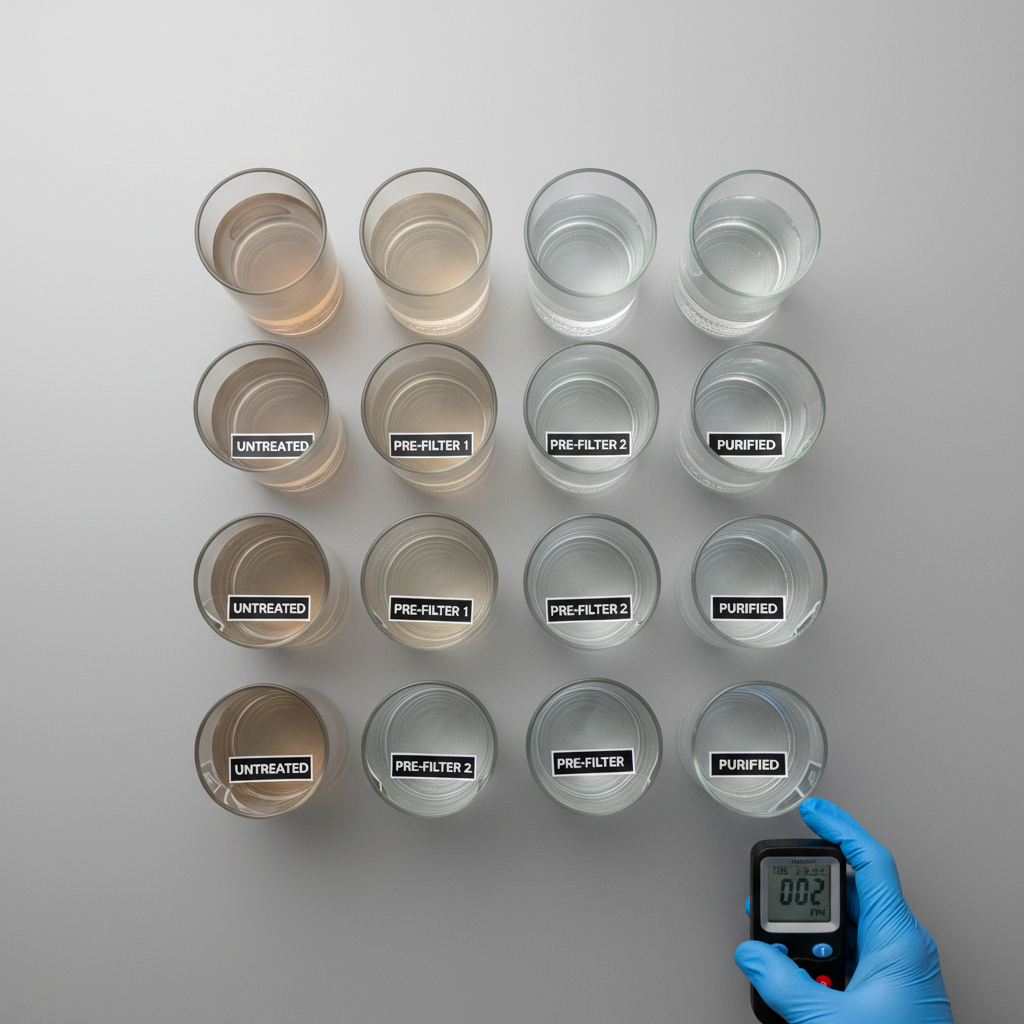
Key Bottleneck 1: Chelated Heavy Metals Are Hard to Remove
Traditional heavy metal treatment depends on pH adjustment. In many cases, operators raise pH to form metal hydroxides, which then settle as sludge. This method can work for free metal ions, but it is often ineffective when metals are complexed.
In electroplating, PCB manufacturing, and electronics wastewater, copper, nickel, zinc, and other metals may bind with organic complexing agents such as EDTA, ammonia-based compounds, citrate, or proprietary process additives. These ligands keep metals dissolved in water and prevent normal hydroxide precipitation.
This means that even after pH adjustment, residual metals may remain above discharge limits. Adding more alkali may only produce more sludge, increase salt loading, and create poor dewatering performance.
For this reason, specialized heavy metal precipitants are often required.
DTC-based organosulfur precipitants are designed to react strongly with heavy metals and form highly insoluble metal complexes. These precipitates can then be removed through coagulation, flocculation, sedimentation, or filtration. Compared with simple hydroxide precipitation, DTC-type products can be especially useful for difficult metal wastewater containing complexed copper, nickel, zinc, cadmium, lead, or mercury.

Key Bottleneck 2: Ultra-Fine Colloids Remain Suspended
Semiconductor wastewater presents another major challenge: ultra-fine suspended particles. Wastewater from wafer cutting, grinding, polishing, CMP, and cleaning processes may contain silica, alumina, ceria, metal oxides, and very fine abrasive particles.
These particles are small, stable, and often highly charged. Because they repel each other, they do not naturally settle. Low-grade coagulants may not provide enough charge neutralization to destabilize them. In some cases, overdosing conventional coagulants can even restabilize particles and worsen turbidity.
This is why selecting the right coagulants for semiconductor wastewater is critical.
High-basicity polyaluminum chloride, or PAC, and high-purity polyferric sulfate, or PFS, can provide strong charge neutralization and rapid destabilization of colloidal particles. When properly selected, they help form denser microflocs, improve clarification, and reduce downstream filter loading.
However, the correct choice depends on wastewater conditions, including pH, conductivity, TSS, fluoride, phosphate, silica concentration, and the type of suspended solids.
Key Bottleneck 3: Sludge Volume and Dewatering Cost
Even when treatment removes contaminants successfully, sludge handling can become a major cost burden. Metal hydroxide sludge is often gelatinous, high in moisture, and difficult to press. If the chemical program is poorly optimized, the plant may generate large volumes of wet sludge that overload filter presses and increase hazardous waste disposal cost.
This is especially important in metal finishing wastewater treatment, where sludge may be classified as hazardous waste due to heavy metal content. Every extra ton of sludge means additional handling, transportation, and disposal cost.
A strong flocculation strategy should not only meet discharge limits but also improve sludge density, settling speed, and filter cake dryness.

Oneschem’s Precision Chemical Approach
Oneschem provides a practical chemical solution for difficult inorganic wastewater based on real water quality data and treatment objectives. Instead of simply increasing dosage, the goal is to use the right chemistry at the right point in the process.
1. DTC-Based Heavy Metal Precipitants
Oneschem’s DTC-type heavy metal precipitants are designed to capture dissolved and complexed heavy metals. These products contain active functional groups that bind strongly with metal ions and form insoluble precipitates.
Benefits may include:
- Improved removal of difficult metals
- Better performance with complexed heavy metals
- Lower residual metal concentration
- Reduced dependence on excessive pH adjustment
- More stable compliance under variable wastewater conditions
For best results, the precipitant should be dosed after pH adjustment but before coagulation and flocculation. Jar testing is recommended to determine the optimal dosage and reaction time.
2. High-Basicity PAC and High-Purity PFS
After metal precipitation, high-performance coagulants are used to destabilize suspended solids and capture fine precipitates. PAC and PFS are widely used in inorganic wastewater coagulation because they provide stronger performance than traditional alum in many applications.
High-basicity PAC can be effective for rapid charge neutralization and turbidity removal. PFS can perform well in high-strength industrial wastewater and may form dense flocs under suitable conditions.
The benefits include:
- Faster clarification
- Stronger microfloc formation
- Better removal of fine colloids
- Reduced chemical overdosing
- Improved effluent stability
For semiconductor wastewater, where fine CMP particles and silica-based solids are difficult to remove, coagulant selection and dosing control are essential.
3. Specially Selected PAM Flocculants
Once coagulation has destabilized the particles, polyacrylamide, or PAM, is used to build larger flocs. The right PAM improves settling, clarification, and sludge dewatering.
Different wastewater streams may require different PAM types:
- Anionic PAM for many inorganic suspended solids
- Cationic PAM for specific sludge conditioning applications
- Nonionic PAM for certain high-salt or special wastewater conditions
- High-molecular-weight grades for stronger bridging and larger flocs
A properly selected PAM can form strong, elastic flocs that resist shear and settle quickly. It can also help filter presses produce drier, thinner sludge cakes, reducing disposal costs.
How to Optimize Metal Finishing Wastewater Treatment
For facilities asking how to optimize metal finishing wastewater treatment, the answer is not simply “add more chemicals.” A better approach includes:
- Testing actual wastewater samples
- Identifying free vs. complexed metals
- Optimizing pH for precipitation
- Selecting the correct heavy metal precipitant
- Matching PAC or PFS to colloid characteristics
- Choosing the right PAM charge and molecular weight
- Monitoring sludge volume and dewatering performance
- Adjusting dosage based on flow and contaminant variation
Jar testing is one of the most valuable tools. It allows operators to compare chemical combinations, dosage levels, settling speed, floc strength, and final effluent quality before making full-scale changes.
Lower Sludge, Better Compliance
An optimized flocculation strategy offers two major advantages: compliance and cost reduction.
First, it helps ensure that effluent heavy metals, TSS, turbidity, fluoride, and phosphorus remain below regulatory limits. This reduces the risk of fines, shutdowns, and production disruption.
Second, it can reduce sludge volume and improve sludge dewatering. This lowers filter press workload, labor requirements, chemical waste, and hazardous sludge disposal costs.
In difficult inorganic wastewater treatment, the lowest-cost chemical is not always the most economical choice. A more targeted chemical program can reduce total operating cost by improving system efficiency.
Work with Oneschem for a Customized Solution
Every semiconductor, electronics, PCB, and electroplating wastewater stream is different. The right chemical program depends on TSS, pH, COD, metal types, chelating agents, fluoride, phosphorus, salinity, and treatment equipment.
Do not guess your chemical dosage. Send Oneschem your wastewater data or sample for technical evaluation. Our team can recommend suitable heavy metal precipitants, high-performance PAC/PFS coagulants, and customized PAM flocculants for your process.
If you need reliable coagulants for semiconductor wastewater or want expert support on inorganic wastewater coagulation, contact Oneschem today.
Visit oneschem.com to request lab testing support, product documentation, or a customized wastewater treatment proposal.