
Coping with Heavy Mineral Scalants in Central Asia's Salt Watersheds: Specialized Citric-Based Low-pH and High-pH RO Cleaners
ON
Across the arid inland regions of Central Asia—including Kazakhstan, Uzbekistan, and the broader Aral Sea basin—access to reliable freshwater is a persistent challenge. Many municipal water plants, industrial facilities, and boiler feedwater stations depend heavily on brackish groundwater treated by brackish water reverse osmosis (BWRO) systems. This groundwater is often extremely mineralized, with very high concentrations of calcium, magnesium, and sulfate.
Under these conditions, scaling is one of the most serious threats to RO system performance. Calcium carbonate and calcium sulfate can precipitate rapidly on membrane surfaces, causing declining permeate flow, rising pressure differentials, and falling salt rejection. Without a well-designed antiscalant and cleaning program, membranes can foul severely within weeks—an expensive problem in regions where replacement membranes are costly and slow to import.
A combined strategy using an appropriate RO membrane antiscalant and a structured, two-stage cleaning sequence with specialized RO membrane cleaning chemicals can help operators protect membranes and extend service life.
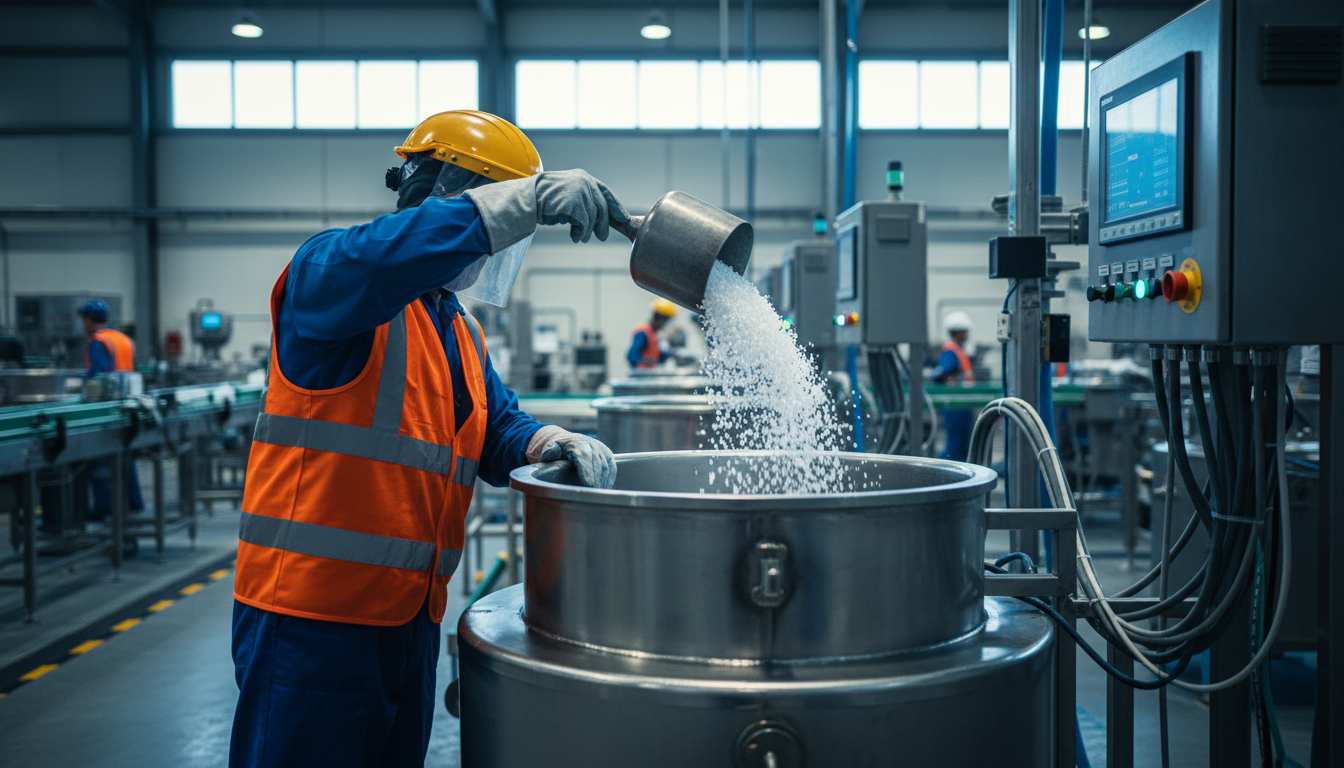
Why Central Asian Brackish Water Scales So Aggressively
Groundwater in salt-affected watersheds frequently carries a heavy mineral load. In some areas, total hardness may exceed 15 mmol/L, along with high alkalinity, sulfate, iron, and manganese. This creates a highly scale-prone feedwater.
As RO systems concentrate the feed to recover more product water, dissolved salts are concentrated in the reject stream. This raises the saturation levels of sparingly soluble compounds such as:
- Calcium carbonate (CaCO₃)
- Calcium sulfate (CaSO₄)
- Barium and strontium sulfates
- Iron and manganese oxides
- Silica, in some formations
When the Langelier Saturation Index (LSI) becomes strongly positive, calcium carbonate can precipitate quickly on the membrane. Iron and manganese, common in many Central Asian aquifers, can accelerate fouling and form tenacious deposits.
The symptoms of brackish water RO scaling in Uzbekistan, Kazakhstan, and similar regions typically include falling normalized permeate flow, increasing feed-to-concentrate pressure drop, and a decline in salt rejection. Left unaddressed, scaling can cause permanent capacity loss.
First Line of Defense: Effective, Environmentally Conscious Antiscalants
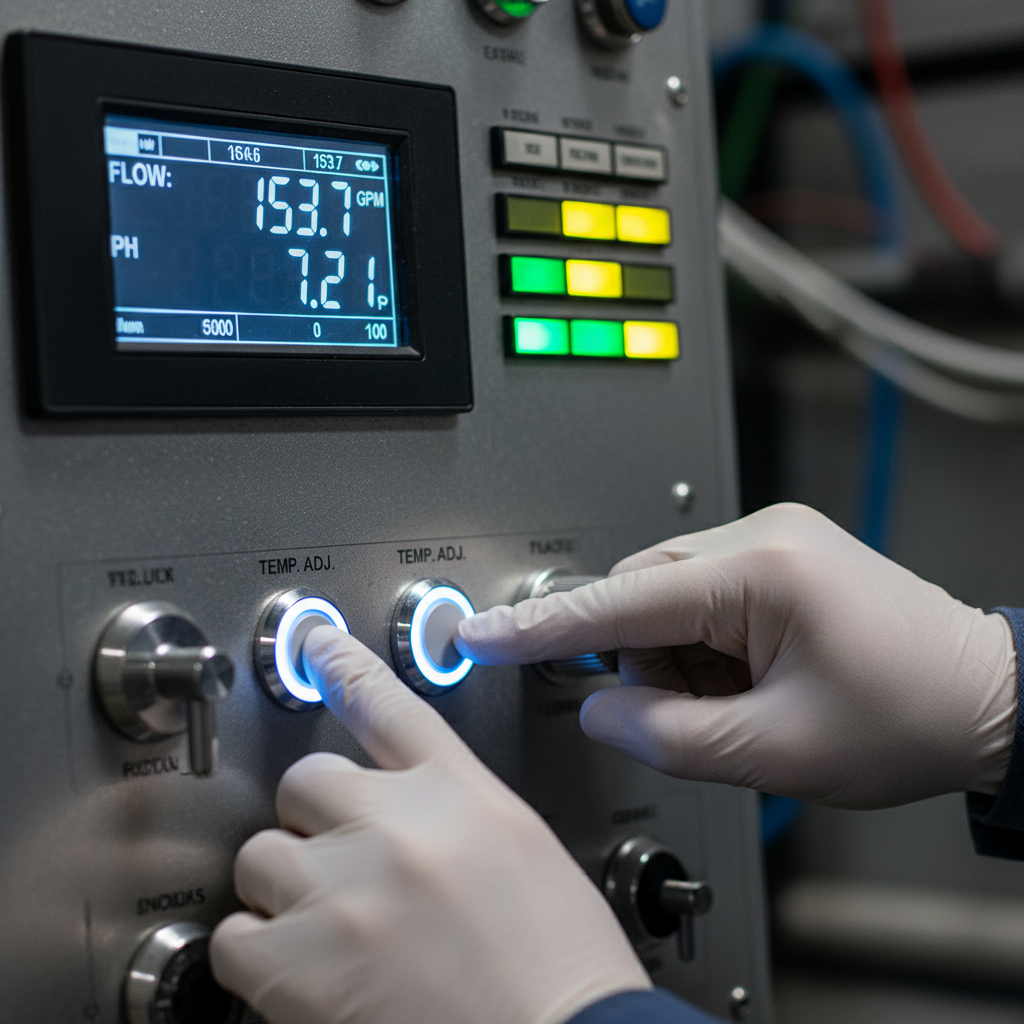
The most cost-effective way to manage scaling is to prevent it. A properly selected RO membrane antiscalant, dosed continuously at the correct rate, can keep sparingly soluble salts in solution well beyond their normal saturation limits, allowing higher recovery without precipitation.
Moving Toward Low-Phosphorus and Phosphonate-Free Options
Environmental protection is a growing priority in the Aral Sea basin and surrounding watersheds, where fragile saline lake ecosystems are under pressure. As a result, discharge regulations increasingly restrict phosphorus-based chemicals that can contribute to nutrient loading in sensitive water bodies.
In response, low-phosphorus and phosphonate-free antiscalant technologies are increasingly used where regulations or site policies require them. Modern multi-acid polymer blends can provide strong scale inhibition—particularly against calcium carbonate under high LSI conditions—while reducing phosphorus discharge.
However, antiscalant selection must be based on actual feedwater analysis and system recovery. The correct product, dosage, and maximum achievable recovery should be confirmed using projection software and, where possible, verified by site monitoring. No single antiscalant performs equally well against every scalant, and iron, silica, and sulfate scales may require specific formulations.
When Scaling Has Already Occurred: The Two-Stage Cleaning Method
Even with good antiscalant dosing, membranes eventually require cleaning. When an RO system has become heavily scaled and is close to "choking," a structured two-stage cleaning approach using compatible RO membrane cleaning chemicals can often restore much of the lost performance.
Step One: Low-pH Acidic Cleaning
Acidic cleaning is normally the first step when carbonate scale, iron, and manganese deposits are the primary problem. Citric-acid-based and other membrane-approved acidic formulations can dissolve calcium carbonate and metal-oxide deposits relatively gently.
A well-formulated low-pH cleaner should remove these inorganic deposits without damaging the sensitive aromatic polyamide active layer of the membrane. Cleaning must follow the membrane manufacturer's recommended pH limits, temperature range, and contact time. After the acid step, the system should be flushed thoroughly before proceeding.
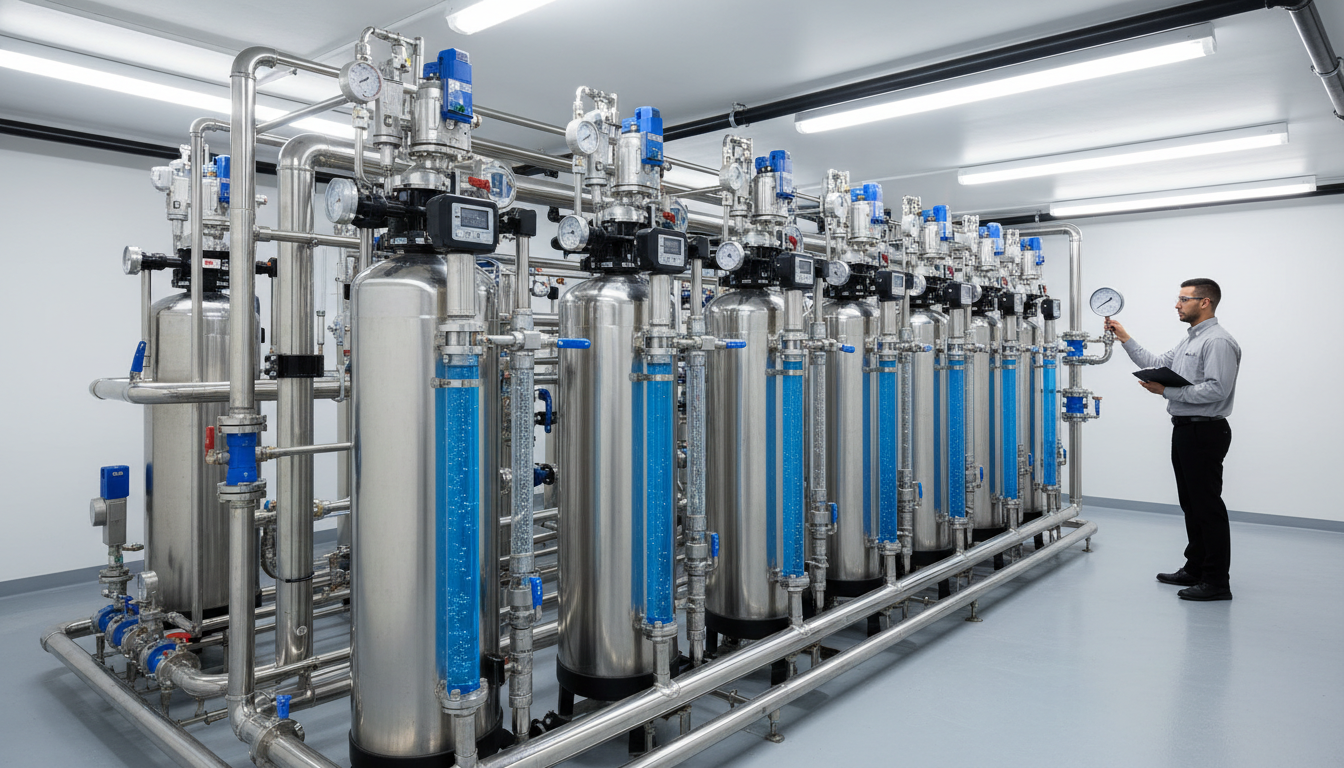
Step Two: High-pH Alkaline Chelating Cleaning
Scaling is often accompanied by organic and colloidal fouling. After the acid wash, a high-pH alkaline cleaner containing chelating and dispersing agents can remove residual clay particles, humic and fulvic organic matter, and any biological or organic film left behind.
The correct sequence matters. For mixed scale and organic fouling, beginning with acid cleaning to remove carbonate scale, followed by alkaline cleaning for organics, is a common approach—but the optimal procedure should be based on membrane autopsy, deposit analysis, and cleaning trials. Applying steps in the wrong order can sometimes fix deposits more firmly to the membrane.
Both cleaning stages should always respect the membrane supplier's chemical compatibility guidelines, and cleaning solutions must be flushed completely before returning the system to service.
The Economics: Revitalize Rather Than Replace
For inland Central Asian facilities, importing new RO membranes can be expensive, and delivery lead times may be long due to complex logistics. This makes membrane preservation especially valuable.
A disciplined program of antiscalant dosing, performance monitoring, and timely, correctly sequenced cleaning can often extend usable membrane life significantly—potentially by several additional years, depending on feedwater quality, operating conditions, and cleaning discipline. Claims of specific life extension should be treated as site-dependent targets rather than guarantees, but the general principle is sound: proactive chemical management is almost always cheaper than premature membrane replacement.
Operators should track normalized permeate flow, differential pressure, and salt rejection so that cleaning is performed at the right time—before deposits become irreversible.
Protect Your System Against High-Hardness Groundwater
High-mineralization brackish groundwater does not have to overwhelm your production line. With the right combination of a suitable antiscalant and a properly designed low-pH and high-pH cleaning program, RO systems in Kazakhstan, Uzbekistan, and across Central Asia can maintain stable performance and longer membrane life.
Contact Oneschem for a Central Asia–specific mineral scaling assessment, antiscalant selection support, and detailed guidance on high-performance RO membrane cleaning procedures tailored to your feedwater and equipment.