
Containerized RO Systems in Africa: How to Reduce Membrane Replacement Costs with Antiscalants and CIP Cleaning Programs
ON
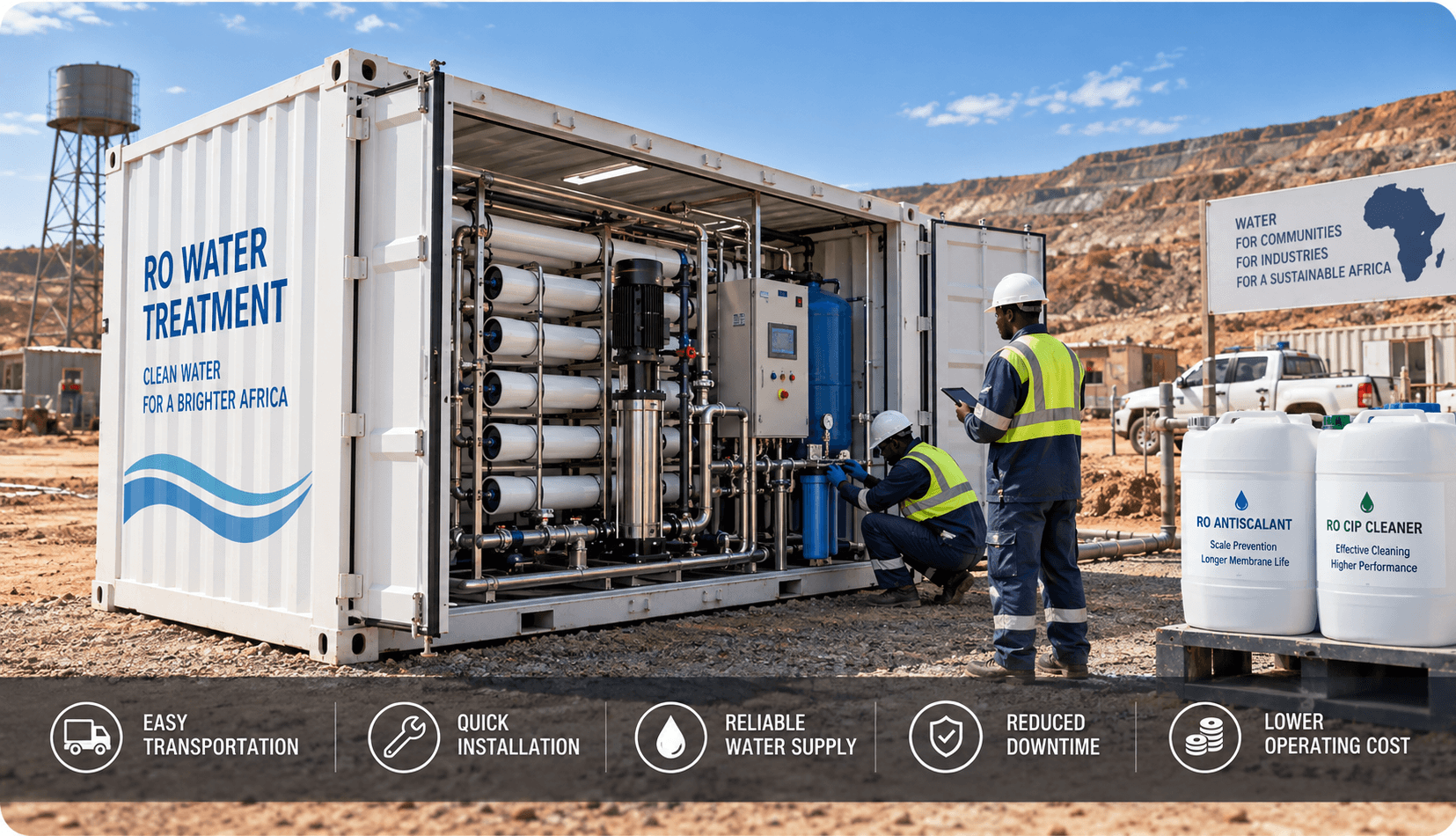
Containerized reverse osmosis (RO) systems are increasingly used across Africa for remote mining camps, rural community water stations, construction sites, emergency water supply, and mobile desalination projects. A packaged RO unit can be transported quickly, installed with limited civil works, and operated where centralized water infrastructure is unavailable.
However, the same advantages that make containerized RO systems attractive also create maintenance challenges. In remote areas of Kenya, Nigeria, Tanzania, Ghana, Zambia, and other African markets, operators may face inconsistent raw-water quality, limited technical personnel, delayed chemical deliveries, and long lead times for imported membrane elements.
When RO membranes foul or scale prematurely, the result is not simply higher maintenance cost. It can mean days or weeks of lost water production while replacement membranes, cartridges, chemicals, or specialist technicians are transported to site.
A preventive chemical program based on the right RO membrane antiscalant and RO CIP cleaning chemical can significantly reduce unplanned shutdowns, extend membrane service life, and lower total operating cost.
The Operational Reality of Containerized RO Systems in Remote Africa
A containerized RO plant is designed for compactness and rapid deployment. But limited space can also mean smaller pretreatment systems, reduced chemical storage, limited CIP capacity, and fewer redundant pumps or filters. If raw-water conditions change, the RO system may have little operational buffer.
Common challenges include:
- Borehole water with high hardness, iron, manganese, silica, sulfate, or TDS
- Seasonal turbidity spikes caused by rainfall and flooding
- Variable generator power and unstable electrical supply
- Inconsistent raw-water flow and pressure
- Limited availability of trained RO operators
- Delayed delivery of replacement membranes and CIP chemicals
- Lack of routine performance data and maintenance records
For a mining operation, a membrane-related shutdown can affect accommodation water supply, dust suppression, mineral processing, and staff welfare. For a community water station, downtime directly affects local access to safe drinking water. Therefore, containerized RO maintenance in Africa must focus on prevention rather than emergency repair.
Why RO Membrane Replacement Cost Is More Than the Membrane Price
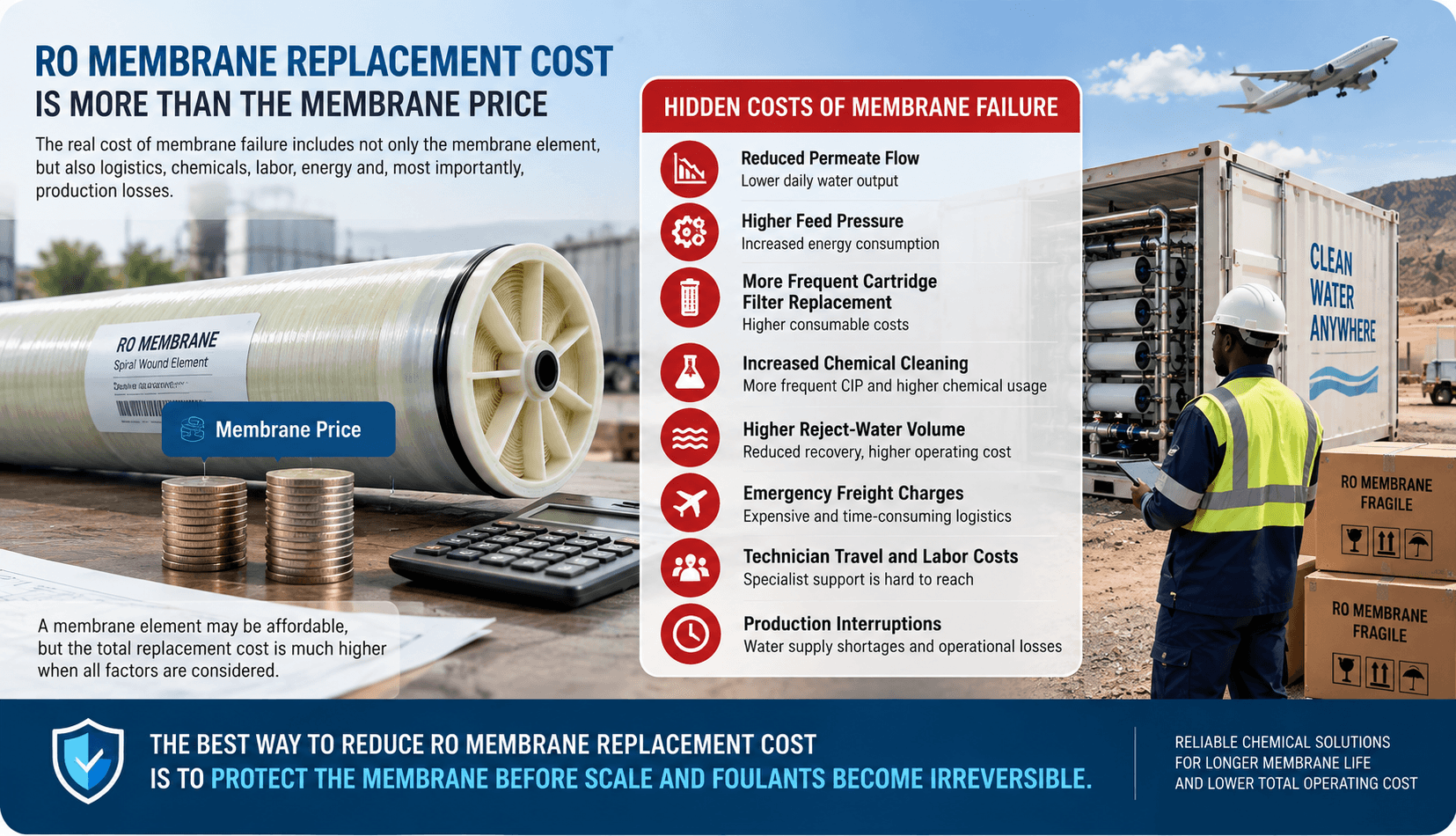
Many operators calculate membrane replacement cost based only on the price of a spiral-wound membrane element. In reality, the total cost of membrane failure is much higher.
A fouled or damaged membrane can cause:
- Reduced permeate flow and lower daily water output
- Higher feed pressure and energy consumption
- More frequent cartridge filter replacement
- Increased chemical cleaning frequency
- Higher reject-water volume due to reduced recovery
- Emergency freight charges for imported membrane elements
- Technician travel and labor costs
- Production interruptions or water supply shortages
In a remote location, a membrane element may be relatively affordable compared with the logistics cost of getting it to site quickly. Air freight, customs delays, regional distribution limitations, and lack of local stock can turn a routine replacement into a major operational event.
The most effective RO membrane replacement cost reduction strategy is to protect the membrane before scale and foulants become irreversible.
How RO Membrane Antiscalants Stabilize Recovery and Reduce Cleaning Frequency
Scaling occurs when dissolved salts become concentrated in the RO reject stream beyond their solubility limits. Common scale-forming compounds include calcium carbonate, calcium sulfate, barium sulfate, strontium sulfate, calcium phosphate, and silica-based deposits.
In African borehole and brackish-water applications, high hardness and alkalinity are especially common. Without proper chemical control, mineral crystals form on membrane surfaces and within feed spacers. These deposits reduce permeate flow, increase differential pressure, and can become difficult to remove.
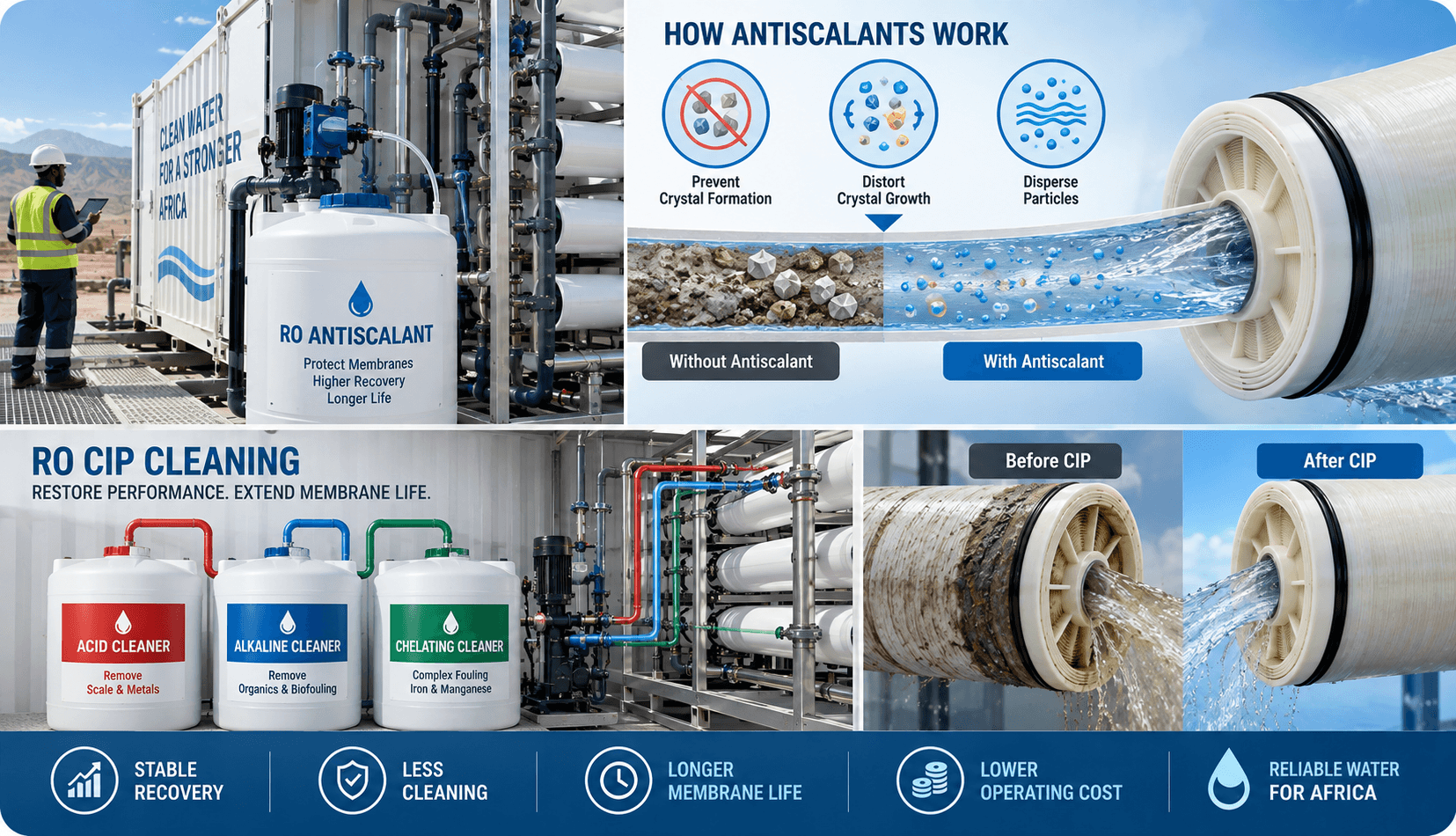
A properly selected RO membrane antiscalant helps prevent this process by:
- Delaying crystal nucleation
- Distorting crystal growth
- Dispersing fine mineral particles
- Increasing the safe operating recovery rate
- Reducing the risk of calcium carbonate and sulfate scale
- Extending the period between CIP cleanings
The right antiscalant is not necessarily the product with the lowest price per kilogram. It must match the raw-water chemistry and RO design. A water analysis should include at minimum:
- Calcium and magnesium hardness
- Alkalinity and bicarbonate
- Sulfate
- SilicaIron and manganese
- Barium and strontium, where relevant
- TDS, pH, temperature, and conductivity
Using these values, the system can be modeled to determine the appropriate RO recovery rate and antiscalant dose. For many systems, antiscalant dosing is commonly in the low mg/L range, but actual dosage must be confirmed through water analysis and membrane projection.
For mobile desalination system chemicals, it is also important to use products that are stable during transportation and storage in hot environments. Chemical drums should be protected from direct sunlight and extreme heat, while dosing pumps should be inspected regularly for loss of prime, crystallization, leaks, and calibration drift.
When Should RO CIP Cleaning Start?
A common mistake is waiting until water production becomes severely reduced before starting CIP cleaning. By that stage, scale or fouling may already be strongly attached to the membrane surface.
Instead, operators should use normalized performance indicators. Because feed-water temperature and salinity affect RO performance, raw measurements alone can be misleading. The most useful indicators are:
1. Normalized Permeate Flow
A gradual decline in normalized permeate flow is often the first sign of scaling, colloidal fouling, biofouling, or compaction. Many operators consider CIP when normalized permeate flow declines by approximately 10–15% from the clean baseline.
2. Differential Pressure
An increase in differential pressure across the membrane vessel or RO stage usually indicates feed-spacer blockage, particulate fouling, iron deposition, or biofilm growth. A 15% increase from the baseline is commonly used as a cleaning trigger, although site-specific limits should be defined.
3. Salt Rejection or Permeate Conductivity
A noticeable decline in salt rejection, or a rise in normalized permeate conductivity, can indicate membrane damage, sealing problems, oxidation, or severe fouling. A reduction of around 5–10% in normalized salt rejection should trigger an investigation.
Acidic, Alkaline, and Chelating RO CIP Cleaning Chemicals
Different foulants require different RO CIP cleaning chemical programs. Using the wrong cleaner may produce poor results or worsen the foulant condition.
Acidic Cleaners
Low-pH cleaners are used primarily for mineral scale, metal oxides, and inorganic deposits. Citric acid-based formulations are widely used because they are effective for calcium carbonate scale and can help chelate iron deposits.
Acidic cleaners may be suitable for:
- Calcium carbonate scale
- Iron oxide and rust deposits
- Light manganese-related fouling
- Inorganic precipitates
Alkaline Cleaners
High-pH cleaners are generally used for organic fouling, biological growth, oils, surfactants, and some dye or humic substances. They often contain alkaline builders, surfactants, dispersants, and chelating agents.
Alkaline cleaners may be suitable for:
- Biofouling and slime
- Natural organic matter
- Oil and grease
- Industrial organic contaminants
Chelating and Specialty Cleaners
For complex fouling involving iron, manganese, hardness scale, and organics, a formulated chelating cleaner may be required. These products are designed to keep dissolved metals suspended during CIP and prevent re-deposition.
In many cases, the recommended sequence is acidic cleaning first for mineral and iron scale, followed by a thorough rinse and then alkaline cleaning for organic or biological deposits. However, the correct sequence should be based on foulant analysis, membrane manufacturer guidance, and cleaning performance data.
Storage and Safety for Remote Sites
Remote RO projects should not store chemicals casually. CIP chemicals, antiscalants, sodium metabisulfite, acids, and alkalis need clear labeling, secondary containment, and separate storage areas.
Basic best practices include:
- Store acids and alkaline products separately
- Keep chemicals in shaded, ventilated areas
- Use chemical-resistant bunds or spill trays
- Maintain Safety Data Sheets (SDS) on site
- Provide gloves, goggles, face shields, and emergency eyewash access
- Train operators on dilution order and CIP circulation procedures
- Never mix acidic and alkaline cleaners directly
A small, well-managed chemical store is much safer and more effective than large volumes of expired or unidentified products.
Build a Simple RO Logbook and Chemical Inventory Plan
For remote systems, complex SCADA platforms may not always be practical. A simple daily operating log can still prevent major failures.
Record the following every shift or every day:
- Raw-water conductivity, pH, turbidity, and temperature
- Feed pressure, concentrate pressure, and differential pressure
- Permeate flow and reject flow
- Permeate conductivity or TDS
- RO recovery rate
- Antiscalant dosing rate and chemical tank level
- Cartridge filter condition and replacement date
- CIP date, chemical type, pH, and cleaning results
In addition, maintain a minimum stock level for antiscalant, CIP chemicals, cartridge filters, sodium metabisulfite, dosing pump parts, and basic water-testing reagents. Stock levels should reflect the realistic delivery lead time to the site—not just normal urban delivery schedules.
Get a Remote-Ready RO Chemical Operations Package
The most reliable containerized RO systems are not those with the most equipment; they are those with a practical maintenance plan, correct chemical dosing, clear cleaning triggers, and sufficient on-site stock.
Oneschem provides remote-project chemical support for containerized and mobile RO systems, including RO membrane antiscalants, RO CIP cleaning chemicals, dosing guidance, CIP procedures, and inventory planning for demanding African water conditions.
Contact our technical team today to receive a customized RO chemical operations package based on your raw-water analysis, membrane model, recovery target, and site logistics.